
If you searched what toxins are released after a chiropractic adjustment, you may have heard that an adjustment flushes stored toxins from your muscles, joints, or bloodstream.
The short answer is: there is no established medical evidence that a chiropractic adjustment releases stored toxins from the body.
A chiropractic adjustment, also called spinal manipulation, involves applying a controlled force to a spinal joint. The purpose is generally to influence joint movement and function, not to remove toxins. The National Center for Complementary and Integrative Health (NCCIH) describes spinal manipulation as a controlled thrust applied to a spinal joint.
Your body already has organs responsible for processing and eliminating metabolic waste. The kidneys filter blood and remove waste and extra water through urine, while other organs and biological systems handle different forms of waste and substances.
So, if you feel different after an adjustment, that does not necessarily mean toxins have been released.
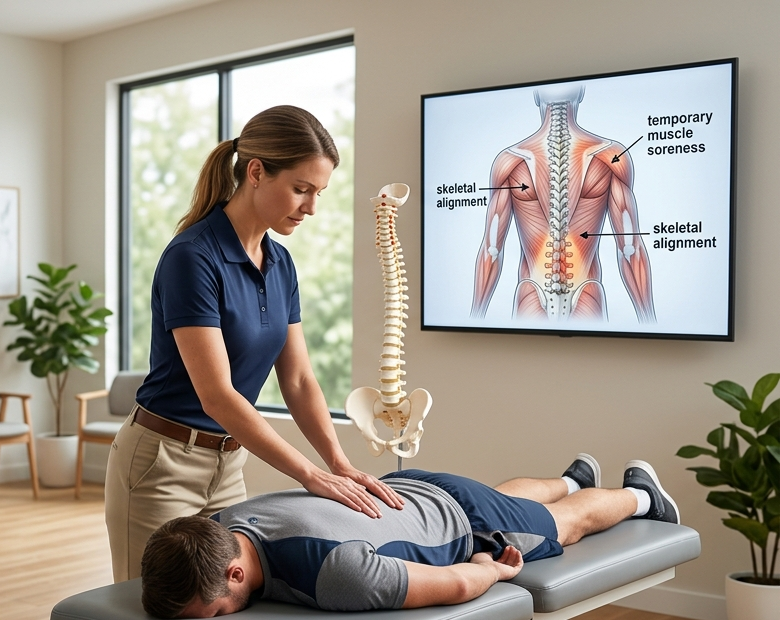
Instead, you may be noticing a temporary response to treatment, changes in muscle tension, altered joint movement, relaxation, or other individual factors.
This distinction matters because the term “toxic release” is commonly used online, but it is not a formal medical diagnosis.
Symptoms of Toxic Release After Chiropractic Adjustment
People searching for symptoms of toxic release after chiropractic adjustment often describe a range of sensations after treatment.
Some patients may experience temporary:
-
Muscle soreness
-
Local tenderness
-
Stiffness
-
Fatigue or tiredness
-
Mild headache
-
Temporary increase in discomfort
-
Feeling relaxed
-
Changes in normal activity or movement
Research and guidance on spinal manipulation describe mild, temporary effects such as discomfort, stiffness, headache, or increased pain. These effects commonly resolve within a relatively short period.
However, these symptoms should not automatically be interpreted as proof that toxins are leaving the body.
For example, soreness after an adjustment can simply reflect how muscles and joints respond to a new mechanical stimulus.
What about flu-like symptoms?
Some people use phrases such as “flu-like symptoms” to describe fatigue, achiness, or feeling generally different after treatment.
These sensations are not proof of a detoxification process.
If symptoms are significant, persistent, or getting worse, it is better to discuss them with a healthcare professional rather than assuming they represent a healthy “healing crisis.”
Feeling High After a Chiropractic Adjustment
Some people report feeling high after a chiropractic adjustment.
This may describe feeling unusually relaxed, calm, light, sleepy, or even mildly euphoric following treatment.
But there is an important distinction: there is not enough evidence to conclude that this sensation means a chiropractic adjustment has released toxins or created a specific detoxification response.
Several factors may influence how someone feels after an adjustment, including:
-
Reduced muscle tension
-
Temporary changes in pain perception
-
Relaxation during treatment
-
A change in physical comfort
-
Expectations surrounding treatment
-
Normal individual nervous-system responses
It is tempting to describe this feeling as a “natural high,” but that phrase can oversimplify what is happening.
If you feel relaxed or comfortable after treatment, that can simply be part of your individual response.
On the other hand, feeling confused, faint, severely dizzy, unusually weak, or experiencing significant neurological symptoms is different and should not be dismissed as a positive treatment response.
Large Bowel Movement After Chiropractic Adjustment
A large bowel movement after chiropractic adjustment is another experience people sometimes connect with “toxic release.”
It is possible for bowel habits to change around the same time as an appointment, but that does not prove that an adjustment caused a detoxification event.
Bowel function is influenced by many factors, including:
-
Food intake
-
Hydration
-
Physical activity
-
Stress
-
Sleep
-
Medications
-
Normal gastrointestinal activity
-
Individual bowel patterns
The autonomic nervous system does regulate many involuntary body functions, including aspects of digestion. However, it would be an oversimplification to say that a spinal adjustment “removes nerve interference” and therefore flushes toxins from the bowel.
If you have a bowel movement after an adjustment, it may simply be normal gastrointestinal activity occurring around the same time as your appointment.
When should bowel changes be evaluated?
A single larger bowel movement is usually not a reason for concern by itself.
However, persistent diarrhea, blood in the stool, severe abdominal pain, repeated vomiting, dehydration, or major changes in bowel habits should be medically evaluated.
Common Symptoms of Toxic Release
The phrase common symptoms of toxic release can refer to many different sensations reported after chiropractic care.
Commonly discussed symptoms include:
-
Soreness
-
Fatigue
-
Headache
-
Stiffness
-
Feeling tired
-
Temporary changes in discomfort
-
Digestive changes
-
Feeling more relaxed
The important point is that these symptoms have multiple possible explanations.
Current evidence does not establish that chiropractic adjustments cause a measurable “toxin release” that produces these symptoms. NCCIH notes that temporary discomfort, stiffness, headache, and tiredness can occur after spinal manipulation.
Therefore, calling these symptoms “detox symptoms” can create unnecessary confusion.
Are these symptoms a sign that the adjustment worked?
Not necessarily.
Feeling sore does not prove that an adjustment was effective, just as feeling no soreness does not mean treatment was ineffective.
Your response should be evaluated based on your symptoms, function, mobility, and overall treatment goals—not by whether you experience a supposed detox reaction.
The Science Behind Toxin Release
The science behind toxin release after chiropractic adjustment is often misunderstood.
There is no established mechanism showing that spinal manipulation causes stored toxins to be released into the bloodstream.
A chiropractic adjustment primarily applies a controlled mechanical force to a joint. Research on spinal manipulation has examined outcomes such as pain, function, and adverse effects rather than demonstrating a detoxification process.
For example, a systematic review and meta-analysis of spinal manipulative therapy for acute low back pain found modest improvements in pain and function, while reported harms were generally transient and musculoskeletal in nature.
What actually happens during an adjustment?
A spinal adjustment may involve a controlled movement or thrust directed at a spinal joint.
Depending on the technique, patients may notice:
-
A brief popping or cracking sound
-
Movement in a restricted joint
-
Temporary soreness
-
A change in how the area feels
-
Relaxation after treatment
A popping sound does not mean toxins are escaping.
The sound can be associated with changes in gas within a joint during movement.
How does the body actually remove waste?
Your body has sophisticated systems for handling waste.
The kidneys filter blood and remove waste products and excess water, which become urine.
The liver also plays a major role in processing substances, while the gastrointestinal system removes waste through bowel movements.
These systems operate continuously.
A chiropractic adjustment is not a substitute for the body’s normal detoxification organs.
Understanding Toxic Release After Chiropractic Care
The phrase toxic release after chiropractic care is best understood as a popular wellness term rather than a medically established process.
Some people use it to describe how they feel after treatment. Others use it to explain temporary soreness, tiredness, headaches, digestive changes, or other sensations.
But labeling every post-treatment symptom as “toxin release” can make it harder to recognize a genuine adverse reaction.
Toxic Release vs. Normal Post-Treatment Response
The idea that chiropractic adjustments flush stored toxins from the body is not supported by established medical evidence. Likewise, soreness after an adjustment does not mean that toxins are leaving the body. Temporary soreness, stiffness, or discomfort can occur as a normal response to spinal manipulation. Headaches may also occur temporarily after treatment, but they should not automatically be interpreted as a sign of detoxification.
A bowel movement after an adjustment also does not prove that toxins have been removed. Bowel activity can naturally vary based on diet, hydration, physical activity, stress, and other factors. Similarly, feeling relaxed or unusually comfortable after an adjustment may be a normal response to treatment, but it does not demonstrate that toxins have been released. More noticeable symptoms do not necessarily mean that a treatment was more effective.
NCCIH notes that reported side effects following spinal manipulation are generally mild and temporary, although rare serious complications have been reported. For this reason, it is more useful to understand your body’s actual response to treatment rather than assuming every unusual sensation represents a detox reaction.
What to Expect After a Chiropractic Adjustment
Knowing what to expect after a chiropractic adjustment can make the experience less stressful.
You may feel the same as you did before treatment, or you may notice a temporary change in how your body feels.
Possible short-term responses include:
-
Mild muscle soreness
-
Local tenderness
-
Temporary stiffness
-
Mild headache
-
Temporary discomfort
-
Feeling tired or relaxed
NCCIH reports that mild-to-moderate temporary side effects such as increased pain or discomfort, stiffness, and headache can occur after spinal manipulation, and these commonly resolve within 24 hours.
Not everyone experiences these effects.
Your response can depend on the area treated, the technique used, your existing condition, activity level, and other individual factors.
What about pain after an adjustment?
Some people may notice temporary soreness or discomfort.
This does not necessarily mean something went wrong.
However, pain that is severe, worsening, persistent, or accompanied by neurological symptoms deserves medical attention.
How to Manage Symptoms After an Adjustment
If you experience mild discomfort after treatment, simple self-care may help.
Stay hydrated
Drink fluids normally according to your individual needs. There is no need to force excessive amounts of water to “flush toxins.”
Keep activity comfortable
Light movement may feel better than remaining completely still, but avoid activities that significantly increase your symptoms.
Follow your provider’s instructions
Your chiropractor can provide individualized guidance based on the technique used and your health history.
Give your body time
Temporary soreness often settles on its own.
If symptoms do not improve or become more intense, contact your healthcare provider rather than assuming you are experiencing a detox reaction.
How to relieve pain after a chiropractic adjustment
For mild soreness, your provider may recommend appropriate movement, rest from aggravating activities, or other conservative strategies based on your situation.
Do not automatically assume that severe pain is part of the healing process.
If pain is significant or continues to worsen, seek appropriate medical evaluation.
The Role of Chiropractic Care in Detoxification
The role of chiropractic care in detoxification needs to be described accurately.
Chiropractic care is not an established detoxification treatment.
A chiropractic adjustment is generally used as part of conservative care for musculoskeletal concerns. Spinal manipulation may provide modest improvements in pain and function for some people with certain types of low back pain.
That is different from claiming that an adjustment removes toxins.
The body already has organs and physiological processes responsible for handling waste. There is also limited evidence supporting commercial “detox” programs as a way to eliminate toxins from the body. NCCIH notes that research supporting detoxification programs is limited and often low quality.
What chiropractic care may support
Depending on the individual, chiropractic care may be used to support:
-
Spinal and joint mobility
-
Physical function
-
Musculoskeletal comfort
-
Movement
-
Recovery from certain injuries
-
Management of some types of back or neck discomfort
The appropriate treatment depends on the patient’s symptoms, health history, examination, and goals.
How Long to Heal After a Chiropractic Adjustment
People often search for how long to heal after a chiropractic adjustment because they want to know whether soreness is normal.
There is no universal recovery time.
For many people, mild post-treatment soreness or discomfort is temporary. NCCIH reports that common mild-to-moderate side effects generally resolve within 24 hours.
However, recovery depends on factors such as:
The reason for treatment
The area treated
Your previous injuries
Your activity level
The treatment technique
Your individual response
Other health conditions
If your symptoms continue beyond the expected period, become more severe, or interfere with normal activities, contact your healthcare provider.
Warning Signs After a Chiropractic Adjustment
Most post-adjustment symptoms are mild, but it is important to recognize warning signs after a chiropractic adjustment.
Seek prompt medical attention if you experience symptoms such as:
-
Sudden or severe headache
-
New weakness
-
Significant numbness
-
Difficulty speaking
-
Difficulty walking
-
Loss of coordination
-
Fainting
-
New vision problems
-
Loss of bladder or bowel control
-
Severe or rapidly worsening pain
-
Other sudden neurological changes
Neck manipulation has been associated with rare reports of cervical artery dissection, which can lead to stroke. However, the evidence does not establish that manipulation necessarily causes these events, and the incidence appears to be low.
The key message is simple: do not label serious or unusual symptoms as “toxic release.”
If something feels significantly wrong after treatment, get appropriate medical care.
Chiropractic Care in Charlotte, NC
If you’re looking for chiropractic care in Charlotte, NC, Chiropractic Fitness provides conservative care for a range of musculoskeletal and wellness needs.
The practice is located at 8316 Pineville-Matthews Rd, Charlotte, NC 28226, and its website lists chiropractic care, sports chiropractic care, physiotherapy, back and neck pain relief, auto injury care, wellness chiropractic care, pediatric care, prenatal care, and spinal X-rays among its services.
Rather than assuming that symptoms after an adjustment are caused by “toxins,” a proper evaluation can help identify what may be contributing to your pain, stiffness, or movement limitations.
Services at Chiropractic Fitness
Chiropractic Care
Chiropractic care can be used for appropriate musculoskeletal concerns involving the spine, joints, and movement.
Sports Chiropractic Care
The clinic provides sports chiropractic care for athletes and active individuals. Its website notes that Dr. Craig Schulman has been a Board Certified Chiropractic Sports Physician since 2006.
Physiotherapy
Physiotherapy is available as part of the clinic’s listed services and may support movement, mobility, and physical function.
Back Pain & Neck Pain Relief
Patients experiencing back or neck discomfort can receive an evaluation to determine whether conservative chiropractic care may be appropriate.
Auto Injury Care
Chiropractic Fitness provides care for patients dealing with musculoskeletal concerns following auto accidents.
Wellness Chiropractic Care
Wellness-focused chiropractic care is available for individuals interested in supporting movement, mobility, and overall musculoskeletal health.
Pediatric Care
Pediatric chiropractic care is one of the clinic’s listed services. Children’s care should always be appropriately tailored to the child’s age, health history, and individual needs.
Prenatal Care
Prenatal chiropractic care is also listed by the clinic. Patients should discuss their pregnancy history and individual circumstances with the provider before treatment.
Spinal X-Rays
Chiropractic Fitness offers digital spinal X-rays in its Charlotte office. The clinic explains that imaging may be used when clinically appropriate to evaluate spinal structures and help guide care planning.
Why an individualized evaluation matters
Not every symptom after chiropractic treatment has the same cause.
If you’re experiencing pain, stiffness, or another concern, a proper assessment can help determine whether chiropractic care is appropriate or whether additional medical evaluation is needed.
For patients in Charlotte and nearby communities, Chiropractic Fitness can be contacted at (704) 543-7206 or through its website.
FAQs About Toxic Release After Chiropractic Adjustment
What are the symptoms of toxic release after a chiropractic adjustment?
There is no established medical syndrome called “toxic release” after a chiropractic adjustment. Temporary soreness, stiffness, headache, fatigue, or increased discomfort can occur after spinal manipulation, but these symptoms do not prove that toxins have been released.
What toxins are released after chiropractic adjustment?
There is no established evidence that chiropractic adjustments release stored toxins from the body. The body’s kidneys, liver, gastrointestinal system, and other physiological processes handle waste and substances continuously.
Why do I feel high after a chiropractic adjustment?
Some people may feel relaxed, calm, sleepy, or unusually comfortable after treatment. This does not establish that toxins have been released. If you experience severe dizziness, confusion, weakness, or other concerning symptoms, seek medical evaluation.
Why do I have a large bowel movement after chiropractic adjustment?
A bowel movement after treatment may simply coincide with normal digestive activity. Food, hydration, stress, physical activity, and individual bowel patterns can all affect bowel movements. There is no established evidence that a large bowel movement proves an adjustment removed toxins.
Is a healing crisis after a chiropractic adjustment real?
“Healing crisis” is not a recognized medical diagnosis for chiropractic treatment. Temporary soreness or discomfort can occur after spinal manipulation, but persistent or worsening symptoms should be evaluated rather than automatically considered part of healing.
Final Remarks
So, what toxins are released after a chiropractic adjustment?
Based on current evidence, there is no established evidence that chiropractic adjustments release stored toxins from your muscles, joints, or bloodstream.
What some people call “toxic release” is better understood as a description of temporary sensations that may occur after treatment. Mild soreness, stiffness, headache, tiredness, or temporary discomfort can happen after spinal manipulation and often resolve quickly.
A large bowel movement, feeling relaxed, or feeling different after an appointment does not by itself demonstrate detoxification.
The goal of chiropractic care should be based on appropriate clinical evaluation and realistic expectations—not the belief that an adjustment must cause a detox reaction to be effective.
If you experience unusual, severe, persistent, or neurological symptoms after treatment, do not assume they are toxins leaving your body. Seek appropriate medical attention.
If you’re in Charlotte, NC, and have questions about back pain, neck pain, sports-related concerns, auto injury recovery, or general musculoskeletal care, Chiropractic Fitness can evaluate your individual needs and discuss whether chiropractic care is appropriate for you.
Book Your Appointment
8316 Pineville-Matthews Rd
Charlotte, NC 28226
Phone: (704) 543-7206
Website: Chiropractor in Charlotte, NC
Contact the Chiropractic Fitness team to discuss your symptoms, goals, and available care options.
Author Bio
Dr. Craig Schulman
Dr. Craig Schulman developed his interest in chiropractic after experiencing neck pain, low back pain, and severe headaches as a football player in high school. His own experience with chiropractic care inspired him to pursue a career focused on helping others with injuries and musculoskeletal concerns.
Dr. Schulman attended Life University outside Atlanta, Georgia, and graduated cum laude with a Doctor of Chiropractic degree. His postdoctoral education includes Triaging the Injured, Caring for the Trauma Patient, and Head Trauma and Brain Injury. He is also certified in whiplash injury through the Spine Research Institute of San Diego and holds credentials including Board-Certified Chiropractic Sports Physician®, Active Release Therapy® certification, and Kinesio Tape® certification. He is a member of The Academy of Chiropractic and the American Academy of Medical Legal Practitioners.