
Back pain can turn simple activities into daily challenges. Sitting at your desk, bending to tie your shoes, or getting comfortable in bed may become difficult when your back hurts. If the pain keeps returning, you may start looking for treatment options that don’t involve surgery.
One option you may come across is spinal decompression therapy. But what is spinal decompression, and can it actually help relieve back or neck pain?
Spinal decompression is a treatment approach designed to reduce pressure on the structures of the spine. Non-surgical spinal decompression uses gentle, controlled pulling forces to stretch the spine. The goal is to ease certain types of back or neck discomfort, especially when discs or irritated nerves may be involved.
Some people experience symptom relief, although research has not shown consistent benefits for everyone.
This guide explains how spinal decompression works, its possible benefits, safety, costs, and what to expect before starting treatment.
What Is Spinal Decompression?
Spinal decompression refers to methods used to reduce pressure on spinal nerves or other structures within the spine. It can involve non-surgical treatment or a surgical procedure, depending on the underlying condition.
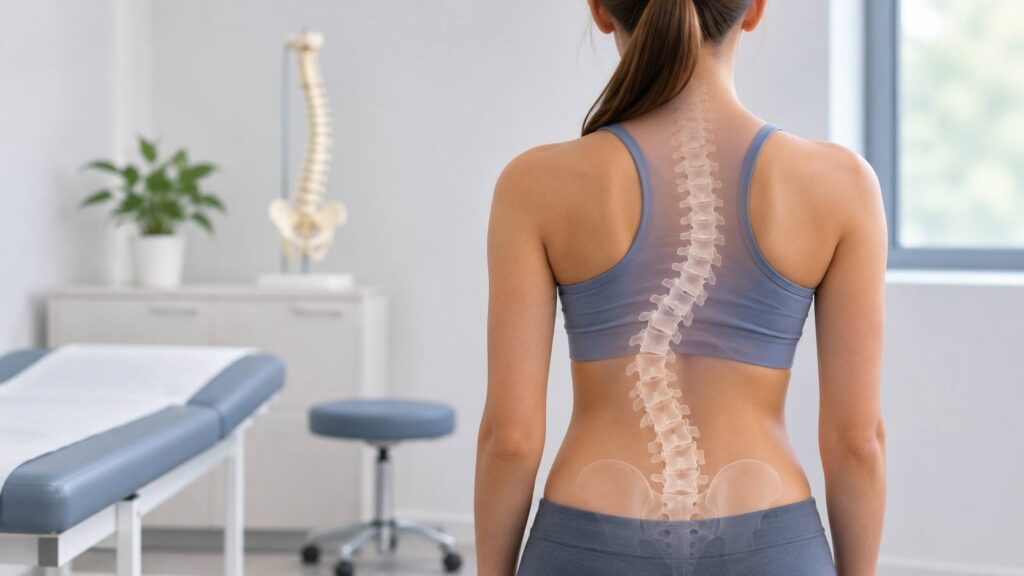
Your spine consists of bones called vertebrae, with soft, cushion-like discs between them. These discs help absorb pressure and allow your back to bend, twist, and move comfortably.
Over time, injury, aging, and everyday strain can affect the discs and surrounding joints. Sometimes, a damaged disc irritates a nearby nerve, causing back pain, neck pain, tingling, or discomfort that travels into an arm or leg.
Non-surgical spinal decompression uses a traction table or another controlled stretching method to apply gentle pulling forces along the spine.
The aim is to temporarily reduce pressure on certain spinal structures and possibly ease related symptoms.
What Are the Different Types of Spinal Decompression?
There are two main approaches.
Non-Surgical Spinal Decompression
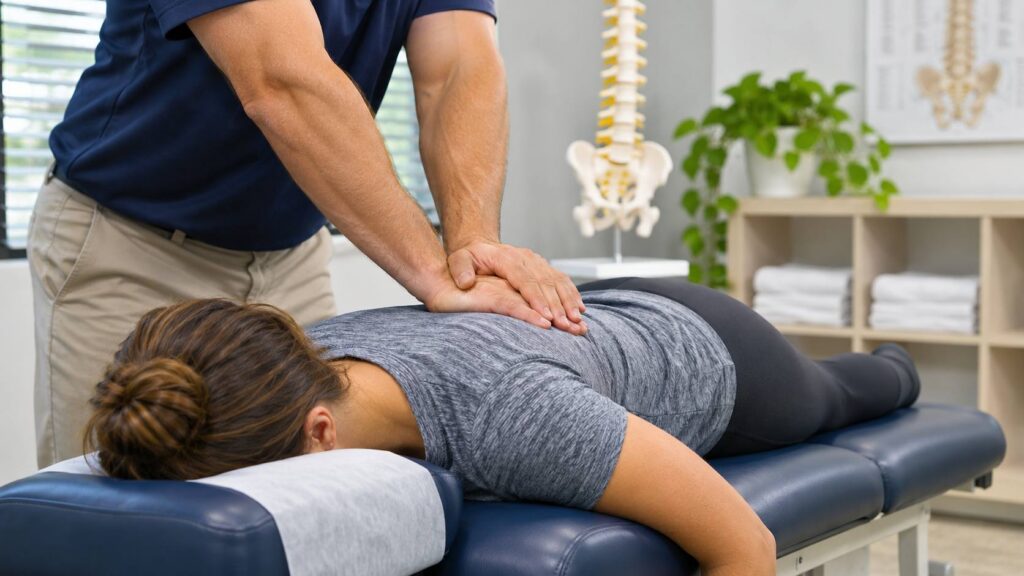
This method uses mechanical traction or controlled stretching without making an incision. It is sometimes offered in chiropractic offices and physical therapy settings.
It may be considered as part of a conservative treatment plan, although its effectiveness varies by condition.
Surgical Spinal Decompression
Surgical decompression involves removing tissue or bone that presses on spinal nerves.
Procedures such as a laminectomy or discectomy may be recommended for certain patients with significant nerve compression, persistent symptoms, or progressive neurological problems.
Both approaches aim to reduce pressure, but they work differently and are used for different medical needs.
How Does Spinal Decompression Therapy Work?
Non-surgical spinal decompression works by applying a controlled pulling force to the spine.
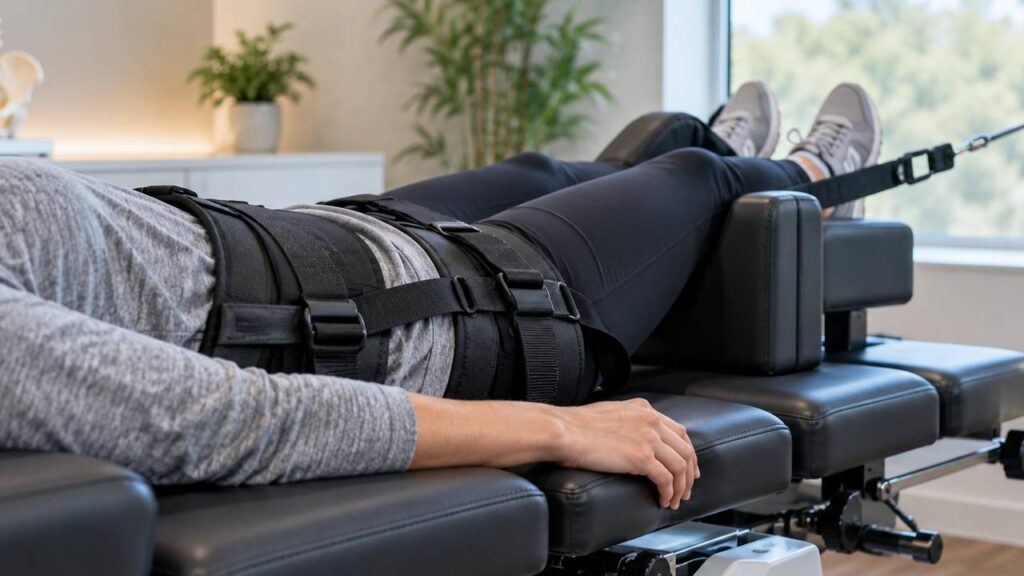
During treatment, a patient lies on a specialized table or traction device. Depending on the equipment and the area being treated, a harness may be placed around the hips or upper body.
The device gently stretches the spine, sometimes alternating between pulling and releasing.
This process is intended to:
-
Temporarily reduce pressure on certain spinal structures.
-
Gently stretch muscles and tissues surrounding the spine.
-
Provide a feeling of reduced tension or stiffness.
-
Potentially ease symptoms linked to irritated spinal nerves.
Some devices are promoted as creating negative pressure inside spinal discs, allowing disc material to move inward. However, research has not established that these changes consistently occur or lead to better clinical outcomes.
The important point: Spinal decompression is not the same as permanently repairing a damaged disc. Its potential value comes from whether it safely improves your symptoms and daily function.
What Conditions May Spinal Decompression Help?
Spinal decompression is sometimes considered for people with back or neck pain related to spinal discs or nerve irritation.
However, having one of these conditions does not automatically mean traction will be effective.
Herniated or Bulging Discs
A bulging disc extends beyond its usual boundary, while a herniated disc involves a more localized displacement of disc material.
Either condition may cause discomfort if it irritates surrounding nerves.
Non-surgical decompression may be discussed as an option for certain disc-related symptoms, but exercise-based rehabilitation and other conservative treatments generally have stronger evidence.
Sciatica
Sciatica occurs when a nerve connected to the lower back becomes irritated or compressed, causing pain that may travel through the buttock and down the leg.
Some clinicians consider traction for selected patients with nerve-related symptoms. Still, studies have shown mixed results, and it is not a routine recommendation for everyone with sciatica.
Degenerative Disc Disease
Spinal discs naturally change with age. Some people develop pain or stiffness related to these changes, while others have no symptoms.
A clinician may consider decompression in selected cases, but it cannot reverse the normal aging process or restore a worn disc to its original condition.
Neck Pain and Nerve Irritation
Cervical traction is sometimes used for neck pain involving irritated nerve roots.
Treatment decisions depend on the cause of pain, neurological findings, and overall spinal health.
Spinal Stenosis
Spinal stenosis occurs when spaces within the spine become narrower and may place pressure on nerves.
Although traction is sometimes discussed for this condition, it does not reliably reverse structural narrowing. Exercise, activity changes, medication, or specialist treatment may be more appropriate.
Does Spinal Decompression Work?
Spinal decompression may help people manage their symptoms, but research does not show consistent or lasting benefits for most types of lower back pain.
Clinical studies of mechanical traction and motorized decompression have produced mixed results.
A 2025 evidence review found that traction probably does not reduce chronic lower back pain more than simulated traction. Some smaller studies suggest that selected patients with nerve-related symptoms might benefit, but the evidence remains limited.
This doesn’t mean every patient will have the same experience.
Pain can come from several sources, including muscles, joints, discs, nerves, and movement habits. A treatment that helps one person may make little difference for someone with a different diagnosis.
What Influences Treatment Results?
A few important factors include:
-
Accurate diagnosis: Understanding what is causing the pain before treatment.
-
Type of symptoms: Muscle-related pain and nerve-related pain may respond differently.
-
Overall spinal health: Existing injuries and medical conditions affect treatment choices.
-
Physical activity: Strengthening and gradual movement often play an important role in recovery.
-
Response to treatment: Continued care should depend on measurable improvement, not a fixed number of sessions.
Rather than relying on decompression alone, patients may benefit from a broader plan that includes appropriate exercises, education, and other evidence-supported care.
What Are the Potential Benefits of Spinal Decompression?
People often explore spinal decompression because it provides a non-surgical approach to spinal discomfort.
Depending on the individual and the source of pain, potential benefits may include:
Temporary Pain Relief
Some patients report less back or neck discomfort after traction-based treatment.
However, the amount of relief varies, and long-term improvement is not guaranteed.
Reduced Muscle Tension
Gentle stretching may help certain patients feel less tight or stiff around the spine.
This may make comfortable movement easier for some individuals.
A Non-Surgical Treatment Experience
Mechanical decompression does not require surgical incisions or anesthesia.
Most patients can return to normal activities afterward, provided their symptoms allow it.
Support for a Broader Recovery Plan
When clinically appropriate, traction may be considered alongside exercise, physiotherapy, and other conservative care.
The most useful measure of success is whether your treatment improves important daily activities, such as walking, sitting, sleeping, or returning to exercise.
Is Spinal Decompression Safe?
Non-surgical spinal decompression is generally tolerated by appropriately screened patients, but it is not suitable for everyone.
Before starting treatment, a qualified healthcare professional should review your symptoms, medical history, and any known spinal conditions.
Extra caution or avoidance may be necessary for people with:
-
Severe osteoporosis or fragile spinal bones.
-
Recent spinal fractures.
-
Spinal tumors or infections.
-
Certain types of spinal instability.
-
Previous spinal surgery or implanted hardware, depending on the procedure and device.
-
Pregnancy, depending on the traction method and medical circumstances.
-
Symptoms suggesting serious nerve compression.
Temporary soreness, muscle spasms, or increased pain can occur during or after treatment.
If symptoms become worse, treatment should stop until a clinician reassesses the situation.
When Should You Seek Medical Care Instead?
Some symptoms need prompt medical attention rather than routine chiropractic treatment.
Seek immediate medical evaluation if back pain occurs with new difficulty controlling your bladder or bowels, numbness around the groin, or rapidly worsening leg weakness.
These can be signs of a serious nerve problem.
Does Spinal Decompression Hurt?
Spinal decompression is usually intended to feel like a gentle, controlled stretch rather than a painful procedure.
During a session, you may notice a mild pulling sensation through your lower back or neck.
Some people find this comfortable, while others feel pressure or stretching around muscles that are already sensitive.
Mild soreness may occur afterward, especially when beginning a new treatment.
Sharp pain, increasing numbness, or worsening pain down an arm or leg should never be ignored.
Tell your provider immediately if the treatment feels uncomfortable. The pulling force may need to be adjusted, or the session may need to stop.
What Happens During a Spinal Decompression Session?
Knowing what to expect can make a first appointment feel more comfortable.
Initial Consultation and Examination
Your provider will first ask about your symptoms, health history, previous injuries, and activities that make your pain better or worse.
A physical examination may assess your posture, movement, strength, reflexes, and sensation.
Imaging is not needed for every patient, but X-rays or MRI scans may be appropriate when clinical findings suggest a specific concern.
Getting Ready for Treatment
If non-surgical decompression is considered appropriate, you will lie on a traction table in a position suited to the equipment and treatment area.
A harness or support system may be used to help apply the pulling force.
Your provider should explain the procedure and give you an opportunity to ask questions.
During the Session
The equipment applies controlled stretching forces.
Some systems alternate between pulling and relaxing, while others maintain a steady force.
The duration varies by device, treatment plan, and patient tolerance. A session may last roughly 15–30 minutes, although there is no universal treatment schedule.
After Treatment
Your provider may ask how you feel and whether your symptoms changed.
Depending on your condition, you may also receive advice about gentle movement, exercises, or daily activities.
A good treatment plan includes regular reassessment to determine whether care is helping.
How Long Does Spinal Decompression Last?
This question can refer to either the length of a treatment session or how long the pain relief lasts.
A non-surgical spinal decompression session often lasts about 15–30 minutes, but the duration of symptom relief varies from person to person.
Some individuals notice temporary relief after treatment. Others may experience little improvement.
There is no reliable evidence-based timeline that guarantees relief for several weeks, months, or years.
How Many Sessions Are Needed?
The number of sessions depends on the diagnosis, symptoms, and response to treatment.
Some clinics recommend multiple visits over several weeks, but there is no proven standard number of sessions that works for every patient.
Before agreeing to an extended plan, ask your provider what improvement you should expect and how progress will be measured.
Better walking tolerance, easier movement, and reduced interference with everyday life are useful signs to track.
What Is the Success Rate of Spinal Decompression?
There is no reliable, universally accepted success rate for non-surgical spinal decompression.
You may see advertisements suggesting success rates of 70% to 90%, but these figures should not be treated as established results for all patients.
Research differs in how it defines treatment success. One study may measure pain relief, while another examines disability, movement, or longer-term recovery.
Some studies also lack strong comparison groups.
For these reasons, a single percentage cannot accurately predict whether decompression will work for you.
A more useful approach is to ask your provider what specific improvement is realistic for your condition and what alternative treatments have stronger supporting evidence.
How Much Does Spinal Decompression Cost?
The cost of spinal decompression depends on the type of treatment, location, provider, number of sessions, and insurance coverage.
Non-surgical decompression and surgical decompression have very different costs.
Treatment |
What affects the cost? |
|
Non-surgical decompression |
Session fees, equipment, treatment frequency, and number of visits |
|
Chiropractic evaluation |
Examination, assessment, and any clinically necessary tests |
|
Physiotherapy |
Type and duration of supervised treatment |
|
Surgical decompression |
Surgical procedure, hospital, anesthesia, surgeon fees, and insurance benefits |
Because prices vary widely, there is no single reliable cost estimate for every patient.
Before treatment, request a written estimate showing individual session charges, any package pricing, and possible additional fees.
Does Insurance Cover Spinal Decompression?
Insurance coverage depends on your specific plan and how the treatment is classified.
Many insurers do not cover specialized motorized spinal decompression because they consider its effectiveness insufficiently established.
Original Medicare generally does not cover non-surgical spinal decompression. Medicare Part B covers only certain medically necessary spinal manipulations performed by chiropractors, subject to its coverage rules.
Ask your insurance provider about coverage, exclusions, deductibles, and prior authorization before beginning treatment.
Can Spinal Decompression Exercises Help at Home?
Spinal decompression exercises usually refer to movements or positions intended to stretch the back, improve flexibility, or reduce uncomfortable pressure.
These exercises are not the same as motorized traction.
For many people with common back pain, a gradual exercise program is an important part of recovery.
Depending on your symptoms, a healthcare professional may recommend:
-
Pelvic tilts: Gentle movements that encourage comfortable lower back motion.
-
Cat-cow stretches: Slow movements between rounded and gently arched back positions.
-
Walking: A low-impact way to maintain movement and physical activity.
-
Core strengthening: Exercises that help the trunk muscles support everyday movement.
-
Gentle mobility exercises: Movements chosen to improve flexibility without increasing symptoms.
The right exercises depend on your diagnosis.
Not every stretch is suitable for someone with a herniated disc, severe nerve pain, or spinal instability.
Avoid forceful hanging, aggressive stretching, or home traction equipment without professional guidance.
Does Spinal Decompression Make You Taller?
Spinal decompression does not permanently increase your height.
The discs between your vertebrae naturally change slightly in height throughout the day.
When you lie down or rest, some fluid returns to the discs. This is one reason people may measure a little taller in the morning than at night.
Traction may temporarily change spinal loading or posture, but there is no good evidence that non-surgical decompression causes permanent height growth.
Its intended purpose is symptom management, not increasing height.
Spinal Decompression vs. Chiropractic Care: What’s the Difference?
Both approaches may be discussed when managing spinal discomfort, but they use different techniques.
|
Feature |
Spinal Decompression |
Chiropractic Care |
|
Main approach |
Applies controlled stretching forces |
Uses spinal or joint manipulation and other conservative methods |
|
Primary goal |
Attempts to reduce pressure on spinal structures |
Aims to improve movement and manage musculoskeletal symptoms |
|
Equipment |
Often uses a traction table |
May use hands, instruments, or specialized tables |
|
Treatment experience |
Gentle pulling or stretching |
Joint movements, sometimes involving an adjustment |
|
Best suited for |
Selected patients after assessment |
Patients with appropriate musculoskeletal conditions |
Neither approach is automatically better for every patient.
The diagnosis, treatment evidence, personal goals, and individual preferences should guide the decision.
For ongoing lower back pain, active rehabilitation, movement, and education are often important parts of treatment, whether or not manual therapy is used.
How Can You Support Your Spine Between Treatments?
Daily habits can play an important role in managing recurring back and neck discomfort.
You don’t need a complicated routine. Small, consistent changes can make movement easier and help maintain physical function.
Stay Physically Active
Try to keep moving within your comfort level. Walking, swimming, and other gentle activities can help you remain active without placing excessive strain on your back.
Strengthen Your Supporting Muscles
Your abdominal, back, hip, and leg muscles all contribute to movement and stability.
A suitable strengthening program may help improve function and confidence during everyday activities.
Change Positions Regularly
If you sit for long periods, take short movement breaks.
Standing, walking, or changing position can help reduce stiffness associated with remaining in one posture.
Use Comfortable Lifting Habits
Keep loads close to your body, move smoothly, and avoid lifting more than you can safely manage.
Pay Attention to Your Symptoms
If pain becomes stronger, travels farther down an arm or leg, or is accompanied by weakness, arrange a medical assessment.
Spinal Health Care at Chiropractic Fitness in Charlotte, NC
Living with back or neck discomfort can affect your work, sleep, hobbies, and everyday routine. Understanding what’s causing your symptoms is an important first step toward choosing appropriate care.
At Chiropractic Fitness in Charlotte, NC, Dr. Craig Schulman provides personalized chiropractic services for patients with spinal discomfort, injuries, and movement-related concerns.
Depending on a patient’s examination and individual needs, the clinic offers services including:
The clinic’s first-visit information also identifies spinal decompression among the treatment approaches that may be discussed when appropriate.
Patients in Charlotte and surrounding communities, including Ballantyne, SouthPark, Pineville, and nearby areas, can contact the clinic to discuss their symptoms and available care options.
Take the Next Step Toward Better Spinal Health
If back pain, neck stiffness, or discomfort traveling into your arms or legs is affecting your daily activities, a professional evaluation can help you understand possible causes and treatment choices.
Schedule an appointment with Dr. Craig Schulman at Chiropractic Fitness in Charlotte, NC, to discuss your symptoms, learn about appropriate conservative care, and develop a plan focused on your individual needs.
Address: Charlotte, NC
Website: Chiropractor in Charlotte, NC
Phone: (704) 543-7206
Map: Chiropractic Fitness – Charlotte, NC
Final Thoughts
Understanding what is spinal decompression and how it works can help you make informed decisions about your spinal health.
This non-surgical treatment may provide relief for people experiencing back pain, neck discomfort, or disc-related problems. While results vary, spinal decompression may be considered as part of a personalized treatment plan that focuses on improving comfort, mobility, and everyday function.
The best approach starts with understanding the cause of your pain and choosing care that fits your needs. Staying active, practicing healthy movement habits, and following professional guidance can also support long-term spinal health.
If ongoing back or neck pain is affecting your daily life, Chiropractic Fitness in Charlotte, NC, offers personalized chiropractic care under Dr. Craig Schulman.
About the Author
Dr. Craig Schulman’s journey into chiropractic care began with his own experiences managing neck pain, lower back discomfort, and headaches while playing football. These challenges inspired him to pursue a career focused on helping others improve their spinal health and physical well-being.
In 1998, he began his education at Life University, studying anatomy, biochemistry, physics, X-ray interpretation, and chiropractic techniques before earning his Doctor of Chiropractic degree. He further expanded his knowledge through training in injury triage, trauma care, head trauma, and brain injury. His professional qualifications include Board-Certified Chiropractic Sports Physician®, Active Release Therapy® certification, and Kinesio Tape® certification.
At Chiropractic Fitness in Charlotte, NC, Dr. Schulman combines his clinical education and sports-related experience to provide personalized chiropractic care for patients dealing with injuries, back and neck discomfort, sports-related concerns, and family wellness needs. His approach focuses on understanding each patient’s condition and supporting better movement, comfort, and overall spinal health.
Frequently Asked Questions
Can spinal decompression fix a herniated disc?
Non-surgical spinal decompression does not reliably repair or permanently reverse a herniated disc. Some patients may experience symptom relief, but many herniated discs improve over time with appropriate conservative treatment. The best approach depends on your symptoms and examination findings.
Does spinal decompression really work for sciatica?
Spinal decompression may provide relief for some people with sciatica, but the research is mixed. It is not recommended as a routine treatment for every patient. Exercise-based care, activity guidance, and other treatments may be more appropriate depending on the cause of nerve irritation.
Is spinal decompression better than surgery?
Non-surgical decompression is less invasive than surgery, but it is not an equivalent substitute when a patient needs surgical treatment for serious nerve compression. Many people can begin with conservative care, while others need specialist evaluation.
How often should you do spinal decompression?
There is no universal treatment frequency supported by strong evidence. Your provider should consider your diagnosis, response to treatment, and overall care plan before recommending repeat sessions. Avoid committing to a lengthy treatment package without regular progress checks.
Can spinal decompression make back pain worse?
Yes, some people experience temporary soreness or an increase in symptoms. If pain becomes sharp, radiates farther into an arm or leg, or comes with new numbness or weakness, stop treatment and seek appropriate medical advice.
Can you drive home after spinal decompression?
Many patients can resume routine activities after non-surgical decompression because it generally does not involve anesthesia or sedation. However, you should follow your provider’s instructions and avoid driving if you feel significant pain, dizziness, weakness, or other symptoms that affect your ability to drive safely.