You notice that one shoulder sits slightly higher than the other. Maybe your child’s clothes hang unevenly, or you’ve started experiencing back discomfort that wasn’t there before. These changes might seem minor, but they can raise an important question: what is scoliosis?
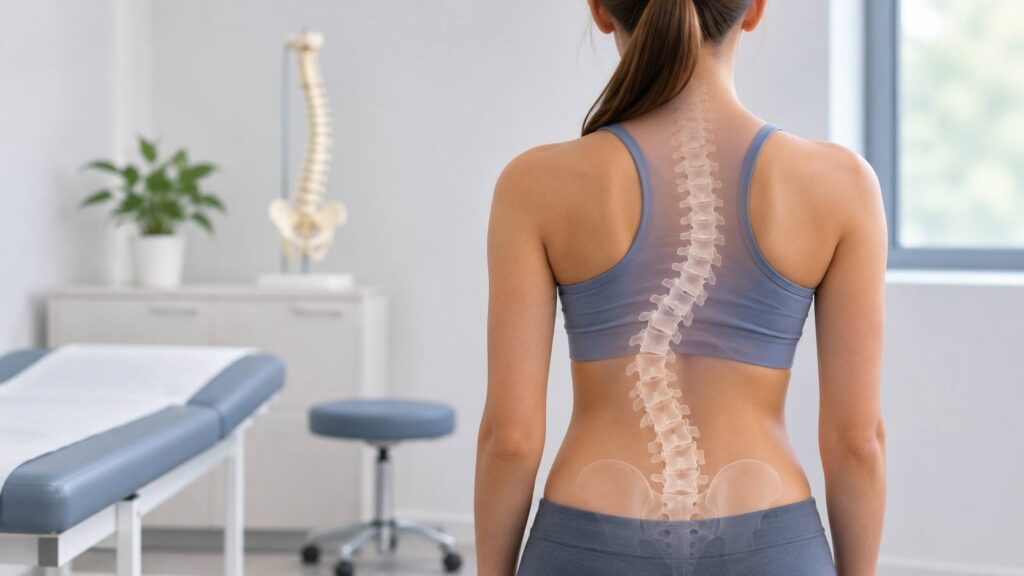
Scoliosis is a condition that causes the spine to curve sideways, sometimes creating a C- or S-shaped appearance. Some people have mild curves that cause few problems, while others develop more noticeable changes that require medical attention.
The good news is that many people with scoliosis live active, healthy lives.
Understanding the condition can help you recognize early signs, learn how doctors measure spinal curves, and explore appropriate treatment options.
What Is Scoliosis?
Your spine naturally curves when viewed from the side. These curves help support your body and absorb pressure during movement.
However, when viewed from behind, the spine should appear relatively straight.
Scoliosis develops when the spine curves sideways by at least 10 degrees, measured on an X-ray using a method called the Cobb angle. The vertebrae often rotate as well, which can make one side of the ribs or back look more prominent.
Scoliosis can affect the upper back, lower back, or both.
How Common Is Scoliosis?
According to the Cochrane review on scoliosis exercises, approximately 2–3% of young people develop scoliosis during adolescence.
Although scoliosis is commonly identified during childhood or the teenage years, adults can also develop spinal curvature because of age-related changes.
What Is Mild Scoliosis?
Mild scoliosis generally describes a spinal curve measuring around 10–20 degrees, although some clinical classifications extend the mild category to approximately 25 degrees.
Many people with mild scoliosis have no noticeable symptoms and need only periodic monitoring. The likelihood of progression depends on factors such as age, remaining growth, and curve pattern.
What Are the Types of Scoliosis?
Not every case of scoliosis develops for the same reason. Understanding the different types helps healthcare professionals choose appropriate treatment.
Idiopathic Scoliosis
Idiopathic scoliosis is the most common type, particularly among children and teenagers.
The word idiopathic means the exact cause is unknown.
Adolescent idiopathic scoliosis typically appears between ages 10 and 18, often during periods of rapid growth.
Younger children can also develop idiopathic scoliosis, although this is less common.
Congenital and Neuromuscular Scoliosis
Congenital scoliosis occurs when some spinal bones do not form normally before birth. These differences may become noticeable during infancy or childhood.
Neuromuscular scoliosis develops alongside conditions affecting muscle control or nerve function, including cerebral palsy and muscular dystrophy.
These forms may require specialized evaluation because their progression and treatment needs differ from idiopathic scoliosis.
Adult Degenerative Scoliosis
Degenerative scoliosis develops when age-related changes affect spinal discs and joints.
As these structures deteriorate, the spine may gradually develop an abnormal curve.
Adults with this condition may experience lower back pain, stiffness, or symptoms related to irritated spinal nerves.
What Causes Scoliosis?
One of the most common questions patients ask is, what causes scoliosis?
For idiopathic scoliosis, researchers have not identified one specific cause. Genetics appears to play a role, but having a family member with scoliosis does not mean you will necessarily develop it.
Other recognized causes include:
-
Abnormal spinal development before birth
-
Neuromuscular conditions affecting muscle control
-
Certain connective tissue disorders
-
Age-related disc and joint degeneration
-
Less commonly, spinal injuries or underlying medical conditions
Can Poor Posture Cause Scoliosis?
No. Poor posture, carrying a heavy backpack, or sitting incorrectly has not been established as a cause of structural idiopathic scoliosis.
These habits may contribute to muscle discomfort, but they do not explain the structural spinal rotation associated with scoliosis.
This distinction matters because improving posture alone cannot straighten a structural scoliosis curve.
What Are the Signs and Symptoms of Scoliosis?
Scoliosis does not always cause pain. In fact, many children and teenagers feel completely normal when the condition is first discovered.
Common Signs of Scoliosis in Children and Teens
Visible changes may include:
-
One shoulder appearing higher than the other
-
One shoulder blade sticking out more
-
Uneven hips or waistline
-
A noticeable lean to one side
-
One side of the rib cage appearing raised when bending forward
-
Clothing that hangs unevenly
These changes can develop gradually, making them difficult to notice without a physical examination.
Symptoms of Scoliosis in Adults
Adults may experience different symptoms, particularly when spinal degeneration is involved.
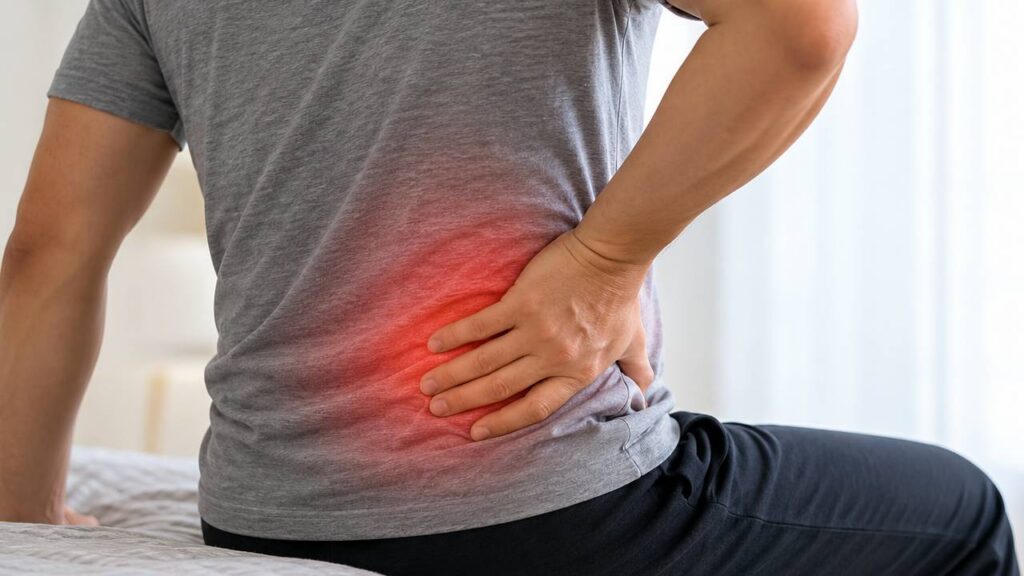
Common complaints include back pain, stiffness, muscle fatigue, and difficulty remaining comfortable while standing or walking.
When narrowed spaces in the spine irritate nerves, some people experience shooting leg pain, numbness, tingling, or weakness.
However, these symptoms can also occur with other spinal conditions. An examination is needed to identify their cause.
How Does Scoliosis Affect the Body?
The effects of scoliosis depend on the size and location of the curve.
Mild scoliosis often has little impact on everyday movement. Larger curves may affect body alignment, creating visible changes in the shoulders, ribs, waist, or hips.
Some people also develop muscle fatigue or discomfort during prolonged activity.
Possible Complications of Scoliosis
Although serious complications are uncommon in mild cases, larger or progressive curves may contribute to:
-
Persistent back discomfort
-
Changes in physical appearance and body confidence
-
Reduced ability to stand or walk comfortably
-
Nerve compression associated with degenerative spinal changes
-
Breathing difficulties in particularly severe curves involving the chest
Not everyone with scoliosis develops these problems. Curve size alone does not determine how much pain someone experiences.
How Is Scoliosis Diagnosed?
Diagnosing scoliosis usually involves a physical examination and, when appropriate, spinal imaging.
A healthcare professional may assess the shoulders, hips, posture, and spinal movement while reviewing symptoms and family history.
What Is Scoliosis Screening?
Scoliosis screening is a preliminary check for signs of abnormal spinal curvature.
A commonly used method is the Adam’s forward bend test.
During this examination, the person bends forward while the examiner looks for unevenness in the ribs or back.
A handheld instrument called a scoliometer may be used to measure trunk rotation.
An abnormal screening result does not automatically mean someone has scoliosis. Additional assessment and X-rays may be needed.
Medical organizations differ on routine screening of children without symptoms. The U.S. Preventive Services Task Force states that evidence remains insufficient to determine whether universal screening provides more benefits than harms.
When Is Scoliosis Diagnosed?
Adolescent idiopathic scoliosis is most commonly identified during the teenage growth years.
However, congenital scoliosis may be discovered much earlier, while degenerative scoliosis generally appears later in adulthood.
The condition can be diagnosed at different ages depending on its underlying cause.
How Is Scoliosis Measured?
Doctors typically measure spinal curvature using the Cobb angle on a standing X-ray.
The measurement identifies the degree of sideways curvature between selected vertebrae.
A Cobb angle of 10 degrees or more meets the usual definition of scoliosis.
Doctors also consider skeletal maturity, symptoms, and whether the curve has changed between examinations.
MRI may be recommended for unusual findings or suspected neurological problems, but it is not necessary for every patient.
How Is Scoliosis Treated?
There is no single scoliosis treatment that is appropriate for everyone.
Treatment depends on the patient’s age, curve size, symptoms, remaining growth, and likelihood of progression.
The main goals are to monitor or limit worsening, manage symptoms, and preserve everyday function.
1. Monitoring Mild Scoliosis
Mild curves often require observation rather than immediate treatment.
A healthcare professional may recommend follow-up examinations and occasional X-rays to check whether the curve is changing.
Monitoring is especially important for growing children because some curves progress during growth spurts.
2. Bracing for Children and Teens
Bracing may be recommended for growing adolescents with moderate curves or curves at risk of worsening.
The brace is designed to reduce the likelihood of progression, not permanently straighten the spine.
A landmark 2013 clinical trial published in the New England Journal of Medicine found that 72% of adolescents assigned to bracing in the combined analysis avoided reaching the 50-degree threshold by skeletal maturity, compared with 48% assigned to observation.
The results support bracing in appropriately selected patients, although individual outcomes vary.
3. Physical Therapy and Scoliosis-Specific Exercises
Physical therapy may help address muscle strength, flexibility, movement, and related discomfort.
Some programs, including the Schroth method, use scoliosis-specific exercises designed around a person’s curve pattern.
However, research has not established that exercises reliably prevent curve progression in every patient.
A 2024 Cochrane review found that evidence for therapeutic exercises remains limited and uncertain.
Exercise may still have a useful role in maintaining physical function and managing symptoms. It should not replace recommended bracing or specialist monitoring.
4. Surgery for Severe Scoliosis
Surgery may be considered for growing adolescents whose curves reach approximately 45–50 degrees or continue progressing.
Spinal fusion is the most common procedure. It uses implants and bone graft material to stabilize the spine and prevent further curvature in the fused section.
Selected growing patients may qualify for other procedures, such as vertebral body tethering.
Surgery carries risks, including infection, bleeding, nerve injury, and complications involving implants or fusion.
The decision requires a detailed discussion with a spine surgeon about expected benefits, limitations, and possible complications.
5. Treatment for Adults With Scoliosis
Adults with mild symptoms may benefit from exercise, physical therapy, appropriate pain management, and activity modifications.
For nerve-related symptoms, a medical professional may consider injections or other treatments.
Surgery is generally reserved for selected adults with substantial pain, neurological problems, spinal imbalance, or major limitations that have not responded adequately to nonsurgical care.
Can a Chiropractor Help With Scoliosis?
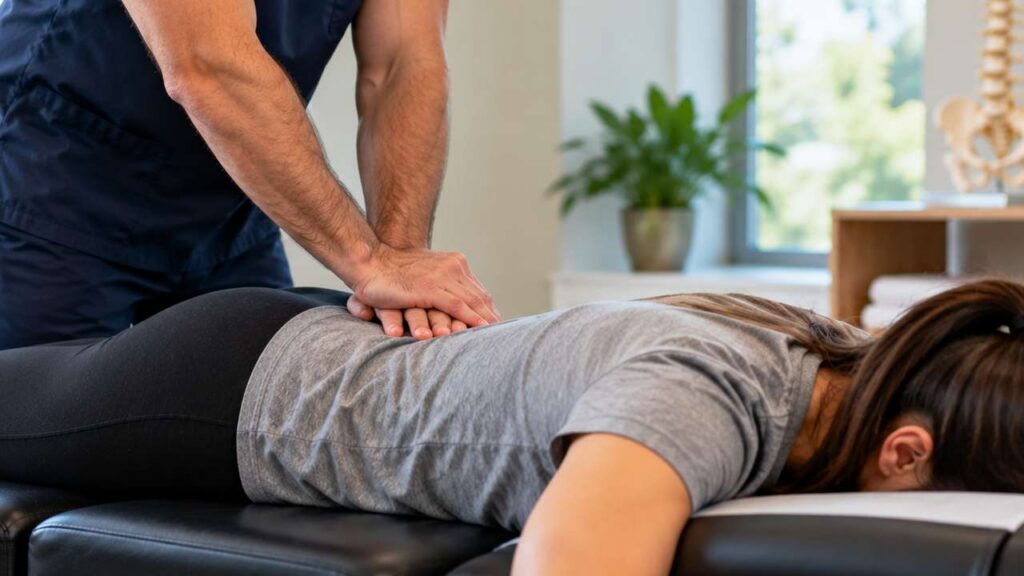
Yes, chiropractic care may help people with scoliosis manage associated back pain, muscle tension, stiffness, and restricted movement. While scoliosis affects the spine’s natural alignment, chiropractic care focuses on supporting musculoskeletal comfort, mobility, and everyday function.
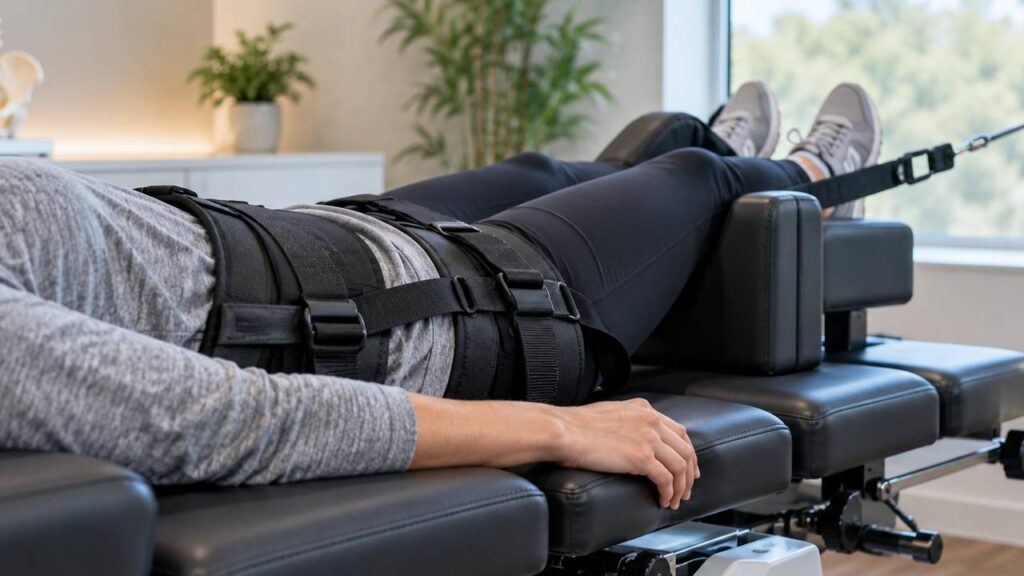
A chiropractor can assess spinal movement, posture, and related muscle discomfort to better understand each patient’s needs. Depending on the findings, care may include gentle chiropractic adjustments, soft tissue techniques, therapeutic exercises, and personalized movement guidance.
For people experiencing scoliosis-related discomfort, these conservative approaches may help improve comfort and support daily activities. However, the available research does not establish that chiropractic adjustments can consistently reduce structural spinal curvature or prevent scoliosis from progressing.
Chiropractic care can also be part of a broader treatment plan that includes physical therapy, exercise, and appropriate medical monitoring. For growing children with progressive curves, coordination with a spine specialist is particularly important.
Does Scoliosis Get Worse With Age?
Sometimes, but not always.
Curves measuring less than approximately 30 degrees when a person finishes growing are less likely to progress significantly during adulthood.
Larger curves, especially those exceeding 50 degrees, may continue worsening gradually.
Adults can also develop new curves as spinal discs and joints change with age.
Regular physical activity, appropriate strengthening, and attention to bone health support general musculoskeletal well-being. However, these measures cannot guarantee that scoliosis will stop progressing.
Anyone noticing increasing spinal asymmetry, worsening pain, or new neurological symptoms should seek professional evaluation.
When Should You See a Healthcare Professional?
Consider an assessment if you notice uneven shoulders, a developing rib hump, unexplained spinal changes, or persistent back discomfort.
Children with suspected scoliosis should receive appropriate evaluation rather than relying only on posture exercises.
Adults experiencing radiating leg pain, numbness, or weakness may need further testing to rule out nerve compression.
Seek emergency medical attention for new loss of bladder or bowel control, numbness around the groin, or rapidly worsening neurological weakness.
These symptoms should never be managed by waiting for a routine chiropractic appointment.
Chiropractic Care for Scoliosis-Related Discomfort in Charlotte, NC
If you have scoliosis alongside recurring back stiffness or musculoskeletal discomfort, understanding the cause of your symptoms is an important first step.
Chiropractic Fitness in Charlotte, NC, provides chiropractic and related musculoskeletal services under the care of Dr. Craig Schulman, D.C.
The clinic offers services including:
For patients experiencing scoliosis-related discomfort, an evaluation can help determine whether conservative musculoskeletal care may be appropriate or whether additional medical assessment is needed.
Spinal X-rays may be considered when clinically indicated, while patients with progressive structural curves may require assessment by an orthopedic or spine specialist.
Chiropractic Fitness does not replace scoliosis-specific orthopedic care, bracing, or surgical treatment when these are medically necessary.
Address: Charlotte, NC
Website: Chiropractor in Charlotte, NC
Phone: (704) 543-7206
Map: Chiropractic Fitness – Charlotte, NC
Final Thoughts
Understanding what is scoliosis, how it affects the spine, and which treatments are available can help you make informed decisions about your spinal health.
Many people have mild curves that cause few problems, while others may need regular monitoring, bracing, rehabilitation, or surgical evaluation.
The most important step is understanding your spinal curvature, its severity, and whether it is progressing.
If you’re experiencing scoliosis-related back pain or discomfort in Charlotte, NC, Chiropractic Fitness can help you explore whether chiropractic care may be appropriate alongside recommended medical treatment. Book an appointment today to discuss your concerns with Dr. Craig Schulman, D.C.
About the Author
Dr. Craig Schulman’s interest in chiropractic care began with his personal experiences managing neck pain, lower back discomfort, and headaches while playing football.
He began studying at Life University in 1998, completing coursework in anatomy, biochemistry, physics, X-ray interpretation, and chiropractic techniques before earning his Doctor of Chiropractic degree.
His additional professional training includes injury triage, trauma care, head trauma, and brain injury. His qualifications include Board-Certified Chiropractic Sports Physician®, Active Release Therapy® certification, and Kinesio Tape® certification.
At Chiropractic Fitness in Charlotte, NC, Dr. Schulman focuses on personalized chiropractic care for patients with back and neck discomfort, sports-related injuries, and other musculoskeletal concerns.
Frequently Asked Questions About Scoliosis
Can Mild Scoliosis Get Worse?
Yes. Mild scoliosis can progress, particularly during rapid childhood or adolescent growth. However, many mild curves remain stable. Follow-up recommendations depend on curve size, age, and remaining growth.
Can You Exercise or Play Sports With Scoliosis?
Most people with scoliosis can remain physically active. Exercise supports strength, flexibility, and general health. Certain activities may need modification after surgery or when symptoms are significant, so individual medical advice matters.
Can Scoliosis Be Prevented?
Most cases of idiopathic scoliosis cannot currently be prevented because the exact cause is unknown. Good posture and exercise support overall spinal health but are not proven methods of preventing structural scoliosis.
What Kind of Doctor Treats Scoliosis?
Primary care clinicians and pediatricians may identify scoliosis. Orthopedic spine specialists, including pediatric orthopedic surgeons, evaluate progressive or significant curves and determine whether bracing or surgery is appropriate.