
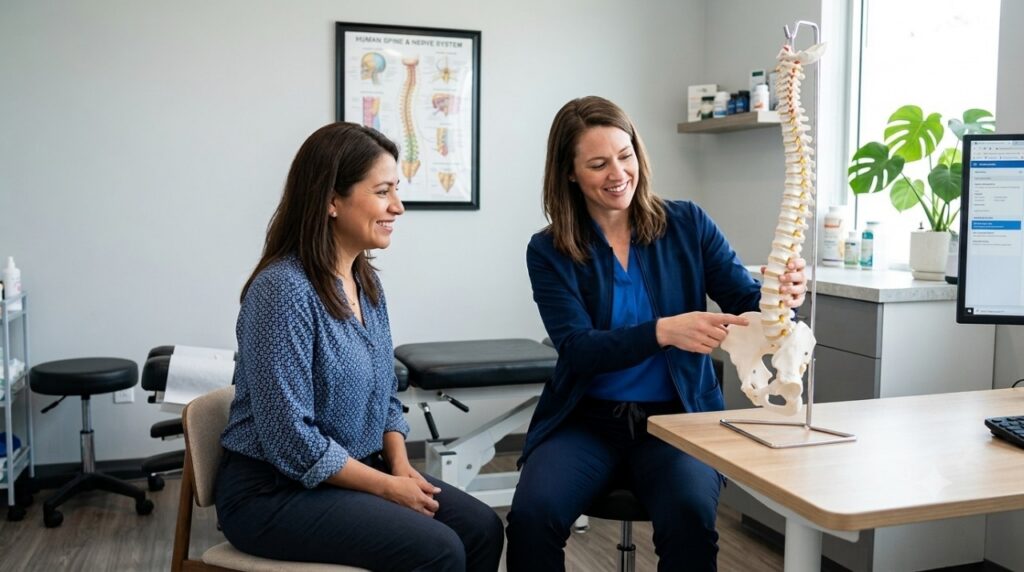

If you’ve ever searched what is a chiropractor? after waking up with a stiff neck, dealing with persistent low back pain, or trying to get back to the activities you enjoy, you’re certainly not alone.
For many people, the first visit to a chiropractor comes with questions: What will they actually do? Is an adjustment painful? Do chiropractors treat more than back pain? And are chiropractors doctors?
A chiropractor is a healthcare professional who focuses primarily on the musculoskeletal system—the bones, joints, muscles, and related structures that help your body move and function. Chiropractic care generally uses conservative, non-surgical approaches such as spinal adjustments, joint mobilization, soft-tissue techniques, exercise, and movement advice.
The goal isn’t simply to “crack” someone’s back. Good Chiropractic Care starts with understanding the person in front of you, identifying movement or musculoskeletal problems, and developing a treatment approach based on their symptoms, physical findings, and goals.
At Chiropractic Fitness in Pineville and the Charlotte, NC area, Dr. Craig Schulman takes a movement-focused, personalized approach to helping patients improve mobility, function, and overall physical wellness.
What Is a Chiropractor?
A chiropractor is a licensed healthcare professional trained to evaluate and manage conditions involving the musculoskeletal system, particularly the spine and joints.
When someone comes into a chiropractic office with back pain, neck discomfort, stiffness, or a movement problem, the first step shouldn’t automatically be treatment. The chiropractor needs to understand what’s happening.
That can involve discussing:
-
Where the discomfort is located
-
When the symptoms started
-
What makes the symptoms better or worse
-
Previous injuries
-
Daily activities and exercise
-
Work-related movement or posture
-
Range of motion
-
Muscle function
-
Joint movement
-
Other relevant health information
From there, the chiropractor can determine whether chiropractic treatment is appropriate and, when necessary, recommend evaluation from another healthcare professional.
This patient-first approach is important because not every type of pain has the same cause, and not every patient needs the same treatment.
What Does a Chiropractor Do?
So, what does a chiropractor do?
In simple terms, chiropractors evaluate musculoskeletal problems and use conservative care to help improve movement, function, and comfort.
Depending on the individual’s needs, chiropractic treatment may include:
-
Spinal adjustments
-
Joint mobilization
-
Soft tissue therapy
-
Stretching techniques
-
Corrective exercises
-
Posture assessment
-
Movement recommendations
-
Ergonomic guidance
-
Injury-prevention strategies
-
Wellness and lifestyle recommendations
One thing worth remembering is that chiropractic treatment isn’t necessarily a one-technique-fits-everyone approach.
For example, an active person recovering from a sports injury may need a different combination of mobility work and rehabilitation than someone whose main concern is everyday neck stiffness.
The treatment plan should make sense for the individual—not simply follow a standard routine.
What Is Chiropractic Therapy?
Chiropractic therapy is a conservative approach to managing certain musculoskeletal problems and improving physical function.
It may involve hands-on treatment combined with movement-based strategies.
Depending on the patient’s condition, a chiropractor may use:
-
Manual spinal adjustments
-
Joint mobilization
-
Muscle and soft-tissue techniques
-
Mobility exercises
-
Flexibility training
-
Corrective exercises
-
Postural education
-
Home-care recommendations
The purpose is to help address problems involving movement and musculoskeletal function rather than simply focusing on a symptom in isolation.
For many patients, that means the conversation goes beyond “Where does it hurt?”
It also becomes:
“How are you moving?”
“What activities are you struggling with?”
“What do you want to be able to do again?”
Those questions can help create a more practical treatment plan.
Chiropractic Treatment: What Can You Expect?
If you’ve never been to a chiropractor before, it’s normal to feel uncertain about what happens during an appointment.
Your first visit typically begins with a conversation about your symptoms and health history.
1. Medical History
You’ll discuss things such as:
-
Current symptoms
-
Previous injuries
-
Relevant medical conditions
-
Medications
-
Physical activity
-
Work demands
-
Lifestyle factors
2. Physical Examination
Your chiropractor may assess:
-
Posture
-
Range of motion
-
Muscle strength
-
Reflexes
-
Joint movement
-
Walking or movement patterns
The goal is to gather enough information to understand the problem and determine whether chiropractic care is appropriate.
3. Treatment Plan
Depending on the findings, your plan may include:
-
Spinal adjustments
-
Joint manipulation or mobilization
-
Soft-tissue techniques
-
Mobility exercises
-
Stretching
-
Rehabilitation exercises
-
Home-care recommendations
A good treatment plan should also be understandable to you. Don’t hesitate to ask what a technique is intended to accomplish, how often treatment may be recommended, and what you can do outside the clinic.
A Real-World Perspective: Why Movement Matters
Dr. Craig Schulman’s interest in chiropractic care was influenced by his own experience with sports-related neck pain, low back pain, and headaches.
That personal experience helped shape his interest in helping other people stay active and move better.
It’s also a useful reminder that musculoskeletal problems aren’t limited to one type of person.
You don’t have to be a professional athlete to experience an injury. A weekend workout, repetitive work, poor movement habits, a long day at a desk, or an unexpected accident can all affect how your body moves.
At Chiropractic Fitness, the focus is on understanding each patient’s situation and building care around their individual needs, rather than assuming that the same approach works for everyone.
Reasons to See a Chiropractor
There are several reasons people consider chiropractic care.
Common concerns include:
-
Lower back pain
-
Neck pain
-
Joint stiffness
-
Sciatica
-
Headaches associated with neck tension
-
Sports injuries
-
Repetitive workplace injuries
-
Mobility limitations
One of the biggest reasons people seek care is simple: their symptoms are getting in the way of everyday life.
Maybe you’re avoiding exercise because your back hurts. Perhaps turning your head has become uncomfortable. Or maybe stiffness is making normal activities more difficult.
These are situations where an evaluation may help determine what’s contributing to the problem and whether chiropractic treatment is appropriate.
Are Chiropractors Doctors?
One of the most common questions people search online is “are chiropractors doctors?”
Yes, chiropractors earn a professional doctoral degree—the Doctor of Chiropractic (D.C.) degree—and licensed chiropractors are healthcare professionals.
However, a chiropractor is not the same type of doctor as a medical doctor (M.D. or D.O.).
Their education and professional scope are different. Chiropractors primarily focus on the musculoskeletal system and conservative management of conditions involving the spine, joints, and movement.
Chiropractors generally do not perform surgery or prescribe medications in the way medical doctors do.
This distinction doesn’t make one profession “better” than the other. Different healthcare professionals have different areas of training and expertise.
A responsible chiropractor should also recognize when a patient’s symptoms fall outside the appropriate scope of chiropractic care and recommend medical evaluation when necessary.
Chiropractor Schooling: How Are Chiropractors Trained?
Chiropractor schooling involves extensive education in subjects relevant to healthcare and musculoskeletal function.
Training typically includes areas such as:
-
Anatomy
-
Physiology
-
Neurology
-
Biomechanics
-
Diagnostic procedures
-
Rehabilitation
-
Clinical practice
Chiropractic education also includes supervised clinical training and licensing requirements.
Requirements vary by location, so patients should verify that their chiropractor is appropriately licensed to practice in their state.
Chiropractor vs Physical Therapist: What’s the Difference?
People sometimes search for chiropractor vs physical therapist because they’re unsure which professional they should see.
Both chiropractors and physical therapists can work with people experiencing pain, movement limitations, and physical injuries, but their education, professional scope, and treatment approaches differ.
Chiropractic care may emphasize spinal and joint care, manual techniques, movement, and musculoskeletal function.
Physical therapy often emphasizes rehabilitation, therapeutic exercise, strength, flexibility, balance, and functional recovery.
There can also be overlap.
In some cases, patients may benefit from care involving multiple healthcare professionals. The right choice depends on your condition, goals, and what your healthcare professional determines is appropriate.
Where Do Chiropractors Work?
So, where do chiropractors work?
Chiropractors may practice in:
-
Private chiropractic clinics
-
Multidisciplinary healthcare centers
-
Rehabilitation facilities
-
Sports medicine settings
-
Wellness centers
-
Occupational health environments
-
Sports organizations
Some chiropractors also work alongside medical doctors, physical therapists, massage therapists, and other healthcare professionals.
Chiropractor for Sciatica
A chiropractor for sciatica may be appropriate when symptoms are associated with musculoskeletal problems involving the lower back, pelvis, or surrounding structures.
Depending on the individual, care may include:
-
Gentle spinal adjustments
-
Joint mobility techniques
-
Stretching
-
Soft-tissue work
-
Mobility exercises
-
Postural recommendations
-
Rehabilitation exercises
However, sciatica can have different causes, and not every case should be managed with chiropractic care alone.
If you experience severe or progressive weakness, loss of bladder or bowel control, or significant neurological changes, seek prompt medical evaluation rather than delaying care.
Is Chiropractic Pseudoscience?
The question “is chiropractic pseudoscience?” is more complicated than a simple yes-or-no answer.
Modern chiropractic care for certain musculoskeletal problems is different from unsupported claims that chiropractic treatment can cure unrelated diseases.
There is evidence supporting conservative approaches for some common musculoskeletal conditions, while claims that chiropractic adjustments can cure infections, serious systemic diseases, or neurological diseases are not supported by strong evidence.
That’s why it is important to choose a licensed chiropractor who practices within an appropriate professional scope and uses evidence-informed care.
Chiropractic care should complement appropriate healthcare—not replace necessary medical treatment.
How Much Does a Chiropractor Cost?
How much does a chiropractor cost?
There isn’t one universal price.
The cost of chiropractic care can depend on:
-
The clinic’s location
-
Initial examination requirements
-
Type of treatment
-
Number of visits
-
Insurance coverage
-
Your individual treatment plan
An initial appointment may cost more than a routine follow-up because it can involve a detailed history and physical examination.
Before beginning care, it’s reasonable to ask the clinic about expected costs, insurance coverage, and payment options.
Chiropractor Salary: How Much Do Chiropractors Make?
A chiropractor salary can vary considerably.
Factors that may affect income include:
-
Geographic location
-
Years of experience
-
Employment setting
-
Practice ownership
-
Patient volume
-
Additional training or areas of specialization
Because compensation can change substantially between practices and regions, salary figures should be viewed as estimates rather than guarantees.
Chiropractor Near Me: How Should You Choose One?
If you’re searching for a “chiropractor near me,” don’t choose a clinic based only on proximity.
Consider asking:
-
Is the chiropractor licensed?
-
What experience do they have with my condition?
-
Do they perform an appropriate evaluation?
-
Can they clearly explain my treatment options?
-
Do they provide evidence-informed care?
-
What services are available?
-
Do they know when to refer patients to another healthcare professional?
You should feel comfortable asking questions.
The right chiropractor should be willing to explain what they are doing and why.
Professional Chiropractic Care in Charlotte, NC
If you’re looking for professional chiropractic care to improve mobility, reduce pain, and support overall wellness, Chiropractic Fitness in Charlotte, NC, provides personalized treatment designed to address movement limitations, discomfort, and overall physical function.
Led by Dr. Craig Schulman, the clinic combines chiropractic techniques with movement-focused care to help patients stay active, healthy, and functioning at their best.
Every treatment plan is tailored to the individual, with a focus on personalized care and long-term wellness.
Services Offered
Chiropractic Care
Helps improve spinal mobility, support joint function, and promote better overall movement.
Sports Chiropractic Care
Supports athletes and active individuals with injury recovery, mobility, and physical performance.
Physiotherapy
Helps improve movement, flexibility, strength, and physical function during recovery.
Back Pain & Neck Pain Relief
Personalized care plans designed to address common musculoskeletal concerns affecting the back and neck.
Auto Injury Care
Provides targeted chiropractic care to support recovery following motor vehicle accidents and related injuries.
Wellness Chiropractic Care
Supports spinal health, mobility, and overall wellness through personalized chiropractic care.
Areas Served
Chiropractic Fitness proudly serves patients throughout:
-
Charlotte, NC
-
Pineville, NC
-
South Charlotte
-
Myers Park
-
Pineville-Matthews area
-
Surrounding North Carolina communities
When Should You See a Chiropractor?
You may want to consider a chiropractic evaluation when pain, stiffness, or limited movement is interfering with normal activities.
Examples include:
-
Persistent back discomfort
-
Neck stiffness
-
Joint restrictions
-
Movement limitations
-
Sports-related musculoskeletal injuries
-
Certain types of headaches associated with the neck
-
Difficulty returning to normal activities after an injury
However, chiropractic care isn’t appropriate for every health problem.
If symptoms are severe, unusual, rapidly worsening, or associated with significant neurological symptoms, medical evaluation may be more appropriate.
A qualified chiropractor can also help determine whether your concern falls within their scope of care or whether another healthcare professional should be involved.
Frequently Asked Questions
What exactly does a chiropractor do?
A chiropractor evaluates and manages musculoskeletal problems using approaches such as spinal adjustments, joint mobilization, soft-tissue techniques, exercise, and movement advice. The goal is generally to improve function, mobility, and comfort.
Is a Doctor of Chiropractic a real doctor?
Yes. Chiropractors earn a Doctor of Chiropractic (D.C.) degree and may be licensed healthcare professionals. However, a D.C. is different from an M.D. or D.O., and chiropractors have a different professional scope.
What conditions do chiropractors commonly treat?
Chiropractors commonly work with musculoskeletal concerns such as back pain, neck pain, joint stiffness, certain headaches, sports-related injuries, and movement limitations.
Is chiropractic treatment painful?
Experiences vary depending on the individual and treatment technique. Some people may notice temporary soreness or tenderness following certain treatments. Your chiropractor should explain the technique and what you can reasonably expect.
Can a chiropractor help with sciatica?
A chiropractor may help some people whose sciatic symptoms are related to musculoskeletal problems. Because sciatica can have different causes, an appropriate evaluation is important before treatment.
Is chiropractic care the same as physical therapy?
No. Chiropractic care and physical therapy are different professions with different training and scopes, although both may address pain, movement limitations, and physical function.
When should I not see a chiropractor first?
If you have serious or rapidly worsening symptoms, significant neurological changes, loss of bladder or bowel control, severe weakness, or another concerning symptom, seek appropriate medical evaluation promptly.
Can chiropractic care help ALS?
No. Chiropractic care cannot treat, cure, or slow the progression of ALS (Amyotrophic Lateral Sclerosis). ALS requires specialized medical management, typically involving a neurologist and multidisciplinary healthcare team. Chiropractic care should not be presented as a treatment for ALS.
Book Your Appointment
Ready to improve your mobility and overall wellness? The team at Chiropractic Fitness is here to help with personalized, patient-focused chiropractic care.
Location: Chiropractic in Charlotte, NC
Phone: (704) 543-7206
Website: Chiropractic Fitness
Author Bio
Dr. Craig Schulman
Dr. Craig Schulman is the founder of Chiropractic Fitness and is committed to providing patient-focused chiropractic care that helps individuals improve movement, mobility, and long-term wellness.
His interest in chiropractic began through his own experience with sports-related neck pain, low back pain, and headaches, which inspired him to pursue chiropractic care as a profession.
Dr. Schulman specializes in helping patients:
-
Reduce pain naturally
-
Improve flexibility and movement
-
Recover from sports and auto injuries
-
Improve spinal function
-
Support long-term health and wellness
Through personalized treatment plans, Dr. Schulman helps patients achieve improved movement, function, and overall wellness through chiropractic care.
Final Takeaway
Yes, when you are working with a properly trained and licensed chiropractor who provides appropriate, evidence-informed care within their professional scope.
Chiropractic care can be a reasonable option for certain musculoskeletal problems, but it is not a replacement for medical care when serious or non-musculoskeletal conditions are suspected.
If you are experiencing back pain, neck discomfort, stiffness, or movement-related concerns in the Charlotte, NC area, consider speaking with a qualified professional about your symptoms and treatment options.
At Chiropractic Fitness, Dr. Craig Schulman can evaluate your concerns and help determine whether chiropractic care is an appropriate part of your care plan.
Ready to find out whether chiropractic care is right for you? Contact Chiropractic Fitness to schedule an evaluation and discuss your symptoms, goals, and available care options.