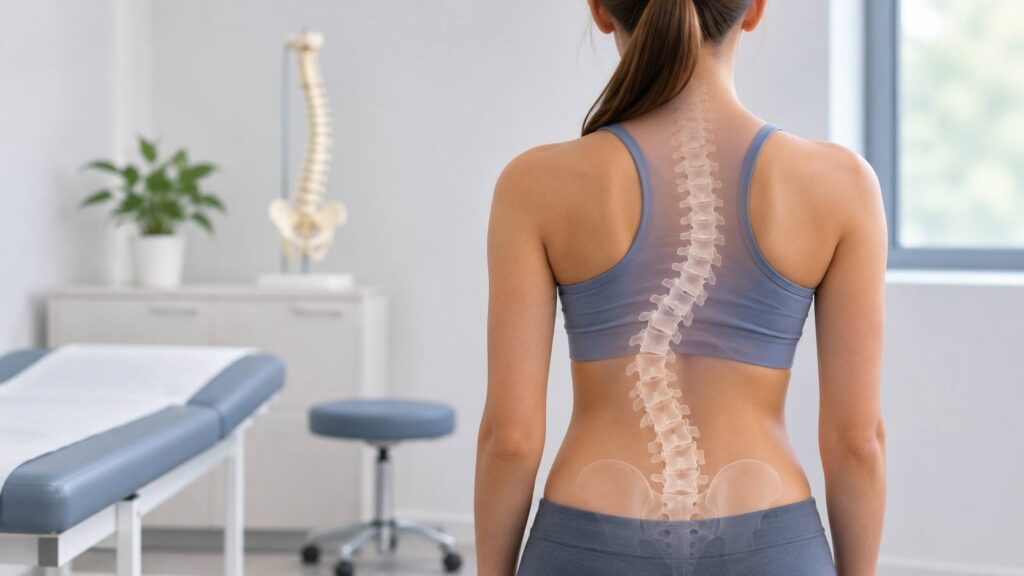
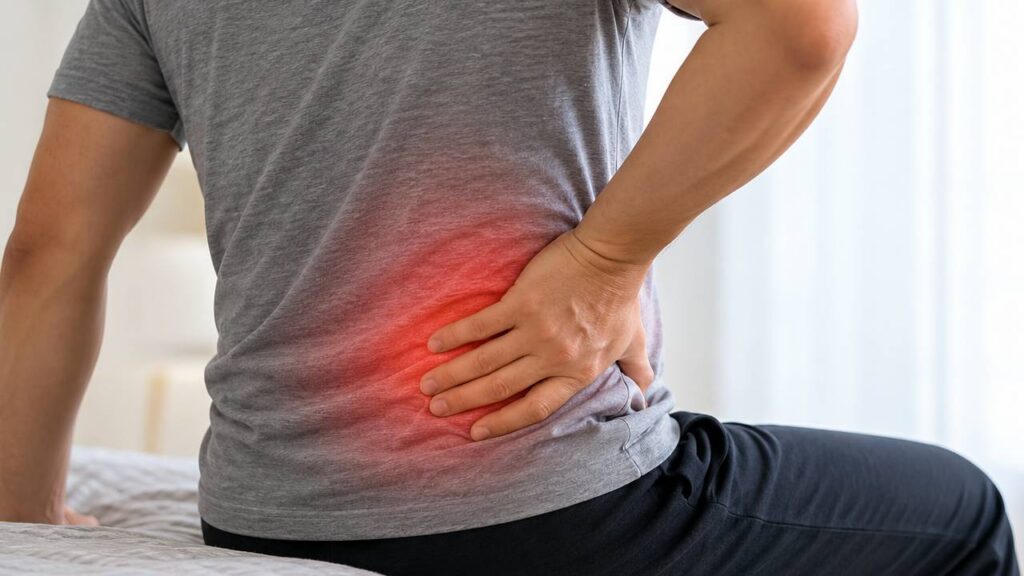

A sudden sharp pain in your back can be worrying, especially when it starts moving into your leg or arm. You may also notice tingling, numbness, or weakness that makes sitting, walking, lifting, or even sleeping uncomfortable.
So, what does a herniated disc feel like?
For many people, it feels like sharp, burning, or shooting pain that travels along a nerve. If the disc problem is in the lower back, the pain may move through the buttock and down the leg. If it is in the neck, it may spread into the shoulder, arm, hand, or fingers.
Not every herniated disc causes pain. Some people have one without any symptoms. What you feel depends on where the disc is located and whether it is irritating a nearby nerve.
This guide explains the common symptoms, causes, treatment options, the difference between a bulging and herniated disc, and when it is important to seek professional care.
What Is a Herniated Disc?
A herniated disc is a problem involving one of the cushions between the bones of your spine.
Most spinal discs contain:
-
Annulus fibrosus: the stronger outer portion of the disc
-
Nucleus pulposus: the softer inner material
A disc herniation occurs when disc material becomes displaced beyond its normal boundary through an area of the outer disc.
The displaced material may irritate or compress a nearby nerve root. Inflammation around the nerve may also contribute to pain, tingling, numbness, or weakness.
Herniated discs most commonly affect the lumbar spine, or lower back, but they can also occur in the cervical spine, or neck.
What Does a Herniated Disc Feel Like?
A herniated disc can feel different from one person to another.
Common descriptions include:
-
Sharp or shooting pain
-
Burning or electric-like pain
-
Deep aching in the back or neck
-
Tingling or a pins-and-needles feeling
-
Numbness in an arm, hand, leg, or foot
-
Pain that travels away from the spine
-
Muscle weakness
-
Symptoms that worsen with certain positions or movements
Some people notice more pain when sitting, bending forward, lifting, coughing, sneezing, or straining.
One clue that a spinal nerve may be involved is radiating pain. Instead of staying only in the back or neck, symptoms follow a path into an arm or leg.
A herniated disc can also appear on an imaging study without causing pain. That is why symptoms, a physical examination, and imaging findings need to be considered together rather than assuming every disc abnormality is responsible for the problem.
Herniated Disc Symptoms in the Lower Back
A lumbar herniated disc can affect nerves that travel into the hips, buttocks, legs, and feet.
Common herniated disc symptoms in the lower back include:
-
Low back pain
-
Pain through one buttock
-
Sharp or burning pain down one leg
-
Tingling in the calf, foot, or toes
-
Numbness in part of the leg or foot
-
Weakness in the leg
-
Difficulty lifting the front of the foot in more severe cases
-
Symptoms that increase after prolonged sitting
Pain traveling down the leg is often described as sciatica. Sciatica is not a diagnosis by itself. It describes symptoms caused by irritation of the sciatic nerve or the nerve roots that contribute to it.
A herniated lumbar disc is one possible cause.
What Does a Herniated Disc in the Neck Feel Like?
When a cervical disc irritates a nerve in the neck, symptoms may extend beyond the neck itself.
You may notice:
-
Neck pain or stiffness
-
Pain around the shoulder blade
-
Pain traveling down one arm
-
Tingling in the hand or fingers
-
Numbness in part of the arm or hand
-
Reduced grip strength
-
Weakness with certain arm movements
Symptoms can change depending on which cervical nerve is affected.
When Are Herniated Disc Symptoms an Emergency?
Most disc problems do not require emergency treatment, but certain neurological symptoms should not be ignored.
Seek urgent medical evaluation if you develop:
-
New loss of bladder or bowel control
-
Numbness around the groin, genitals, buttocks, or inner thighs
-
Rapidly worsening leg weakness
-
Major difficulty walking
-
Severe symptoms after significant trauma
-
Progressive neurological loss
Loss of bladder or bowel function combined with saddle-area numbness or significant weakness can be associated with cauda equina syndrome, which requires immediate medical evaluation.
What Causes a Herniated Disc?
There is not always one clear event that causes a disc to herniate.
Common causes of a herniated disc and contributing factors include:
Age-Related Disc Changes
Spinal discs gradually change over time. They may lose water content and become less flexible, making the outer portion of the disc more vulnerable to injury.
Heavy or Awkward Lifting
Lifting a heavy object while bending or twisting can place substantial stress on the lower back.
Repetitive Physical Work
Frequent lifting, bending, pushing, pulling, or twisting may contribute to repeated stress on spinal structures.
Sudden Injury
A fall, sports injury, or auto accident may contribute to a disc injury, although not every herniation is caused by trauma.
Body Weight and Physical Conditioning
Higher mechanical loads and poor trunk conditioning may place additional strain on the lower back in some people.
Genetics
Some people may have a greater inherited tendency toward disc degeneration or disc-related problems.
Smoking
Smoking has been associated with changes in spinal disc health and disc degeneration.
Usually, a herniated disc develops from a combination of normal disc changes and mechanical stress rather than from one simple cause.
What Does a Herniated Disc Look Like?
You cannot determine what a disc looks like based on pain alone.
When advanced imaging is needed, an MRI can show the discs, nerve roots, spinal canal, and surrounding soft tissues in detail.
A radiology report may describe a herniation as a:
-
Protrusion
-
Extrusion
-
Sequestration
These terms describe the shape and extent of displaced disc material.
An X-ray does not directly show a herniated disc because discs are soft tissue. However, spinal X-rays may sometimes be used to evaluate bone structures, alignment, degeneration, or other possible causes of symptoms.
Not every person with back or neck pain needs an MRI. Imaging decisions depend on the examination, severity and duration of symptoms, neurological findings, trauma history, and other clinical concerns.
Bulging Disc vs. Herniated Disc: What Is the Difference?
People often use the terms interchangeably, but medically they do not mean exactly the same thing.
What Is a Bulging Disc?
A bulging disc describes a broad extension of the disc beyond the edges of the neighboring vertebral bodies.
A bulge does not automatically mean that the disc has torn, and a bulging disc is not classified as a herniation simply because part of the disc extends outward.
Differences Between a Bulging Disc vs. Herniated Disc
Feature |
Bulging Disc |
Herniated Disc |
|
Pattern |
Broad disc extension |
More localized displacement |
|
Disc material |
Remains relatively contained |
Disc material is displaced beyond its normal boundary |
|
Nerve symptoms |
May or may not occur |
May or may not occur |
|
Common with aging |
Yes |
Can also occur with degeneration or injury |
|
Requires treatment |
Only when clinically relevant |
Only when clinically relevant |
Neither finding automatically explains someone’s pain.
Some people have a disc bulge or herniation on an MRI without symptoms, while a smaller abnormality in the wrong location may irritate a nerve and cause significant symptoms.
The examination and symptom pattern are therefore just as important as the scan.
Is a Slipped Disc the Same as a Herniated Disc?
In everyday conversation, “slipped disc” usually refers to a herniated disc, but the phrase is not anatomically precise.
A spinal disc does not simply slide out from between the vertebrae.
Instead, disc material becomes displaced from its normal position.
You may also hear terms such as:
-
Ruptured disc
-
Prolapsed disc
-
Disc protrusion
-
Disc extrusion
These terms are sometimes used differently depending on the specific imaging finding, so reviewing the actual diagnosis with a qualified healthcare professional can help avoid confusion.
How Is a Herniated Disc Diagnosed?
A diagnosis usually begins with a conversation about your symptoms and a physical examination.
The provider may ask:
-
Where does the pain begin?
-
Does it travel into an arm or leg?
-
What makes it better or worse?
-
Is there numbness or tingling?
-
Have you noticed weakness?
-
Did symptoms begin after an injury?
-
Are symptoms improving or getting worse?
The examination may include checking:
-
Muscle strength
-
Reflexes
-
Sensation
-
Walking
-
Spinal movement
-
Positions that reproduce symptoms
-
Signs of nerve irritation
Imaging may be recommended when the results could change treatment, when symptoms are persistent or severe, or when there are neurological or other concerning findings.
A scan should be interpreted alongside the examination rather than used by itself to diagnose the source of pain.
What Is the Treatment for a Herniated Disc?
Treatment for a herniated disc usually starts conservatively when there is no emergency neurological problem.
The best treatment depends on the location of the herniation, severity of symptoms, nerve function, general health, and how symptoms change over time.
Stay Gently Active
Complete bed rest is usually not the goal.
Short walks and comfortable daily movement can help prevent excessive stiffness. Activities that sharply increase radiating pain may need to be temporarily modified.
Medication
Depending on your health history, a medical professional may recommend nonprescription or prescription medication to help manage pain or inflammation.
Medication is not appropriate for everyone, so individual medical guidance matters.
Physiotherapy and Rehabilitation
Exercise-based rehabilitation may focus on:
-
Improving comfortable movement
-
Restoring strength
-
Building trunk endurance
-
Improving flexibility when appropriate
-
Gradually returning to normal activities
Exercise selection should be based on the person’s symptoms rather than using the same routine for every disc problem.
Chiropractic Care
Some people with back pain, neck pain, or disc-related symptoms may be evaluated for conservative chiropractic care.
A chiropractor should first assess symptoms, strength, sensation, movement, neurological findings, injury history, and other factors before deciding whether manual treatment is appropriate.
Not every person with a herniated disc is a candidate for the same technique. Progressive weakness, severe neurological findings, suspected cauda equina syndrome, fracture, infection, or other serious conditions require appropriate medical evaluation or referral rather than routine manipulation.
Injections
For persistent radicular pain, a physician may consider an epidural steroid injection in selected cases.
The purpose is generally to reduce inflammation and pain around an irritated nerve. It does not physically repair the disc, and results vary.
Surgery for a Herniated Disc
Most people with a herniated disc do not automatically need surgery.
Surgical evaluation may become appropriate when there is:
-
Progressive neurological weakness
-
Severe nerve compression
-
Cauda equina syndrome
-
Persistent disabling symptoms despite appropriate nonsurgical treatment
-
Symptoms and imaging findings that clearly match a surgically treatable nerve problem
A common lumbar procedure is discectomy or microdiscectomy, in which the surgeon removes disc material that is pressing on a nerve.
The decision for surgery for a herniated disc should be individualized. The potential benefits need to be weighed against risks, recovery requirements, symptom severity, and nonsurgical alternatives.
Will a Herniated Disc Heal on Its Own?
Many people improve without surgery.
So, will a herniated disc heal on its own?
In some cases, the displaced disc material can become smaller over time through a biological process known as spontaneous resorption. The immune system may help break down and remove some of the exposed disc material.
Pain may also improve as inflammation settles and the irritated nerve recovers.
However, improvement does not happen on a fixed schedule.
Some people feel better relatively quickly, while others need a longer period of rehabilitation and symptom management. The type of herniation, nerve involvement, severity of symptoms, activity demands, and other health factors can all affect recovery.
If symptoms are steadily improving and there is no progressive neurological loss, conservative care is commonly considered before surgery.
How to Relieve Herniated Disc Pain in the Lower Back
If you are trying to understand how to relieve herniated disc pain in the lower back, focus first on movements and positions that reduce rather than spread your symptoms.
Helpful strategies may include:
Keep Moving Within Your Comfort Level
Short walks and frequent changes of position may be more comfortable than spending long periods sitting or lying down.
Avoid Repeated Painful Bending and Twisting
Temporarily reduce movements that repeatedly send pain farther down the leg.
Adjust Your Sitting Position
Use a supportive chair and change positions regularly instead of remaining seated for hours.
Find a Comfortable Sleeping Position
Some people are more comfortable:
-
On their side with a pillow between the knees
-
On their back with support under the knees
Use whichever position reduces symptoms.
Use Heat or Cold for Comfort
Some people prefer cold during an acute flare, while others find heat more soothing for muscle tightness. Neither method repairs the disc, but either may provide temporary symptom relief.
Use Exercise Carefully
A movement that helps one person may irritate another.
Exercise should not be forced simply because it is labeled a “herniated disc exercise.” If a movement causes pain, numbness, or tingling to spread farther into the leg, stop and seek professional guidance.
Build Strength as Symptoms Settle
A gradual rehabilitation program can help restore trunk strength, endurance, movement confidence, and normal activity.
Can Chiropractic Care Help With a Herniated Disc?
Chiropractic care may be one conservative option for selected patients with back or neck pain associated with disc problems.
The first step should be an examination rather than automatically receiving an adjustment.
A chiropractor may assess:
-
Where your symptoms travel
-
Muscle strength
-
Reflexes
-
Sensation
-
Spinal and joint movement
-
Injury history
-
Activities that increase or reduce symptoms
-
Signs that require imaging or medical referral
Depending on the findings, care may involve manual treatment, mobility work, rehabilitation, activity advice, or coordination with another healthcare professional.
The goal should be to choose care that matches the person’s condition rather than assuming every herniated disc needs the same treatment.
Frequently Asked Questions
How do I know if I have a herniated disc?
A herniated disc may cause sharp or burning pain that travels into an arm or leg, along with tingling, numbness, or weakness. However, these symptoms can have several causes. A physical examination and, when appropriate, imaging are needed to determine whether a disc is responsible.
Can a herniated disc cause pain without back pain?
Yes. A lumbar herniated disc can sometimes cause significant buttock or leg pain with relatively little low back pain. Similarly, a cervical disc problem may cause arm symptoms even when neck pain is mild.
Does a herniated disc always show symptoms?
No. Some people have disc herniations visible on imaging without pain, numbness, or weakness. A scan finding becomes clinically important when it matches the person’s symptoms and examination.
Can walking help a herniated disc?
Gentle walking is often well tolerated and can help people remain active during recovery. However, activity should be adjusted if walking significantly increases radiating pain, numbness, weakness, or other symptoms.
How long does a herniated disc take to improve?
There is no single recovery time. Many people improve with conservative treatment, while others experience symptoms for longer. Recovery depends on nerve involvement, severity, type of herniation, activity level, and individual health factors.
When should I see a professional for a herniated disc?
Consider an evaluation if pain is severe, radiates into an arm or leg, persists, limits normal activities, or is accompanied by numbness or weakness. Seek urgent care for loss of bladder or bowel control, saddle-area numbness, or rapidly worsening weakness.
Herniated Disc Care in Charlotte, NC
If pain from a possible disc problem is making it hard to work, sleep, exercise, or handle daily activities, a proper evaluation can help you understand what may be causing it.
At Chiropractic Fitness in Charlotte, NC, Dr. Craig Schulman provides personalized care based on your symptoms, movement, and overall condition. Depending on your needs, care may include chiropractic treatment, physiotherapy, or other supportive services.
The clinic also provides:
If your condition needs medical imaging, specialist care, or another type of treatment, the next step can be discussed after your evaluation.
Chiropractic Fitness – Charlotte, NC
8316 Pineville-Matthews Rd
Charlotte, NC 28226
Phone: (704) 543-7206
Website: Chiropractor in Charlotte, NC
Conclusion
So, what does a herniated disc feel like? It may cause sharp, burning, or shooting pain, along with tingling, numbness, or weakness. In some cases, the pain can travel into the arm or leg.
Many people improve with conservative treatment and do not need surgery. The best approach depends on where the disc problem is located, how severe the symptoms are, and whether a nerve is affected.
If your symptoms are not improving or are affecting your daily life, getting evaluated can help you understand the cause and choose the right treatment plan.
Book an appointment with Dr. Craig Schulman at Chiropractic Fitness in Charlotte, NC to discuss your symptoms and find out whether conservative care may be suitable for you.
Author Bio
Dr. Craig Schulman’s interest in chiropractic began after experiencing neck pain, low back pain, and headaches while playing football.
He attended Life University beginning in 1998, studying anatomy, biochemistry, physics, X-ray interpretation, and chiropractic techniques. He later earned his Doctor of Chiropractic degree, qaetorbley cum laude.
His additional education includes coursework in injury triage, trauma care, head trauma, and brain injury. His listed qualifications include Board-Certified Chiropractic Sports Physician®, Active Release Therapy® certification, and Kinesio Tape® certification.
At Chiropractic Fitness, Dr. Schulman provides personalized chiropractic care for people seeking support with injuries, sports-related concerns, family care, and wellness.