
Disc Injuries in Athletes: Chiropractic Care, Recovery, and Prevention in Charlotte
Athletes push their bodies to perform. That drive is inspiring—but it also means the spine absorbs a lot of force, repetition, and stress. Disc injuries are one of the most common reasons active people in Charlotte find themselves sidelined. The good news: most disc problems respond well to precise, conservative chiropractic care focused on restoring motion, reducing nerve irritation, and building resilient movement patterns. In this guide, I’ll explain what disc injuries are, how they happen, what to watch for, and how we at Chiropractic Fitness help athletes prevent them and return to the sports they love—safely and confidently.
What is a disc injury in athletes? A disc injury occurs when one of the soft cushions between the spinal bones (discs) becomes irritated, bulges, or herniates. This can create back or neck pain and, at times, nerve symptoms into an arm or leg. With the right evaluation and chiropractic care, many athletes recover without surgery.
Table of Contents
Understanding Disc Injuries in Athletes
Your spine is made of vertebrae stacked like building blocks. Between them sit discs—flexible, fibrous rings with a gel-like center. Discs act like shock absorbers, allowing you to bend, twist, sprint, and lift. When a disc is stressed beyond its capacity, the outer layers can irritate or tear. This might cause a bulge or herniation that can inflame nearby nerves.
Disc injuries aren’t all the same. Some are minor and settle quickly; others involve nerve compression and need a more structured plan. Athletes might feel a sharp twinge during a lift, a gradual ache after repeated training sessions, or radiating symptoms after a sudden twist. Importantly, not all disc changes on MRI cause pain. That’s why a hands-on, movement-based examination is essential to connect your symptoms to what you actually need for recovery.
Common Causes in Sports and Training
Disc stress builds when the spine is repeatedly loaded in positions it doesn’t tolerate well. For athletes, common culprits include heavy lifting with rounded bending (especially deadlifts or cleans done under fatigue), repetitive rotation (think golf, baseball, tennis), long periods of sitting between training sessions (tight hips and stiff mid-backs increase lumbar strain), deconditioning during the off-season, and sudden changes in training volume or intensity.
Field and court sports can add impact and unpredictable loads. Runners and rowers see high repetition. Gymnasts and wrestlers manage deep flexion and torsion. The pattern is the same: if alignment, technique, and tissue capacity don’t match the demands of the sport, discs can complain.
Signs and Symptoms You Shouldn’t Ignore
Disc-related pain often presents as deep, localized back or neck pain that may be worse with sitting, bending, or coughing. If a nerve is affected, you might notice pain, tingling, numbness, or weakness down a leg (sciatica) or into an arm. Many athletes report stiffness in the morning that eases as they move, only to flare after prolonged sitting or a hard session.
Pay attention to patterns. Pain that centralizes (moves out of the leg and back toward the spine) as you move is usually a good sign during recovery. Pain that intensifies, spreads, or is accompanied by progressive weakness needs prompt evaluation.
How Chiropractic Care Leads Recovery
Chiropractic is frontline, non-invasive spine care. At Chiropractic Fitness in Charlotte, we lead athletes through a clear plan: accurate diagnosis, targeted spinal adjustments, gentle disc-friendly techniques, and progressive movement retraining. This approach reduces pain, calms nerve irritation, restores mobility, and builds capacity so you can return to your sport with confidence.
Precise chiropractic adjustments
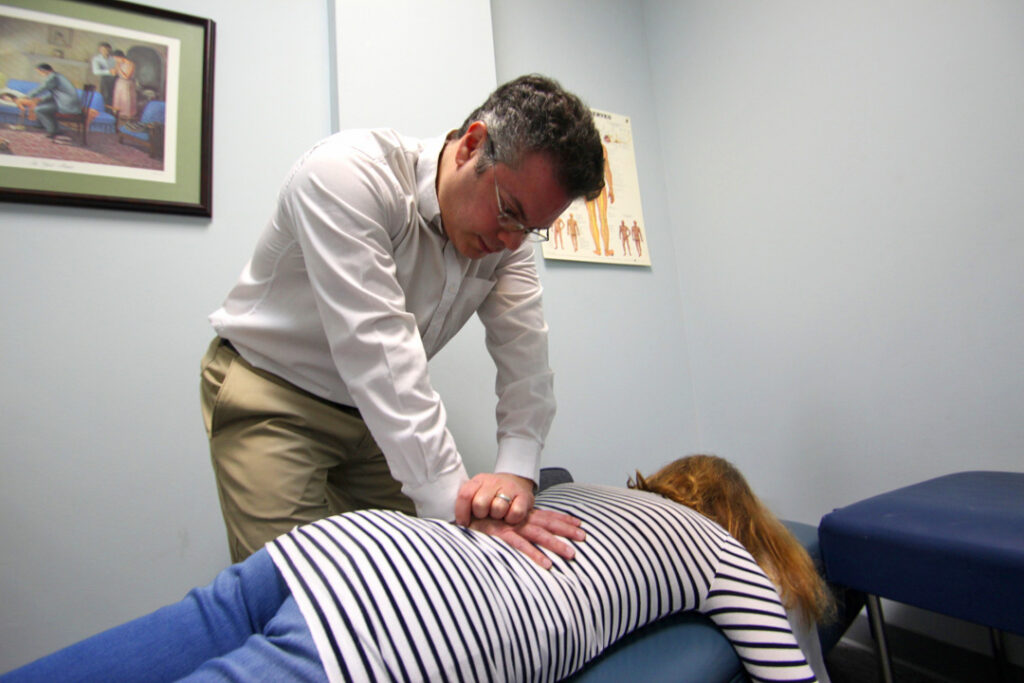
Spinal joints around an irritated disc often become restricted. Gentle, specific adjustments restore normal motion. Better motion spreads load more evenly across the spine and reduces local stress. Many athletes feel immediate improvements in mobility and ease of movement.
Flexion-distraction and mobilization
When appropriate, we use flexion-distraction—gentle, rhythmical traction and flexion on a specialized table—to reduce pressure within the disc and create space for irritated nerves. Mobilization techniques can also help desensitize stiff segments without aggressive force, which is especially useful in acute cases.
Spinal decompression and traction
Mechanical traction or decompression can temporarily lower intradiscal pressure and ease nerve irritation. We determine candidacy based on your exam and response to care. The goal is to calm symptoms so you can move better and start rebuilding strength and control.
Directional preference and nerve mobility work
Many disc injuries have a “directional preference”—movements that reduce symptoms. We identify yours and use it to guide safe home exercises. When nerves are irritated, gentle nerve mobility drills can help reduce sensitivity. These are always tailored to your presentation and progressed carefully.
Chiropractic-guided rehab and return to play
Adjustments open the door; skillful rehab keeps it open. We coach bracing strategies, hip hinge mechanics, and sport-specific progressions that protect the disc while restoring power and endurance. The result is not just pain relief, but better movement capacity under load—so re-injury risk falls and performance rises.
What does the research say?
Clinical guidelines from the American College of Physicians include spinal manipulation among recommended first-line options for acute and chronic low back pain, noting improvements in pain and function for many patients (ACP, 2017). The National Center for Complementary and Integrative Health also summarizes evidence supporting spinal manipulation for certain types of back pain (NCCIH). As always, care is individualized to your sport, goals, and exam findings.
Imaging and safety
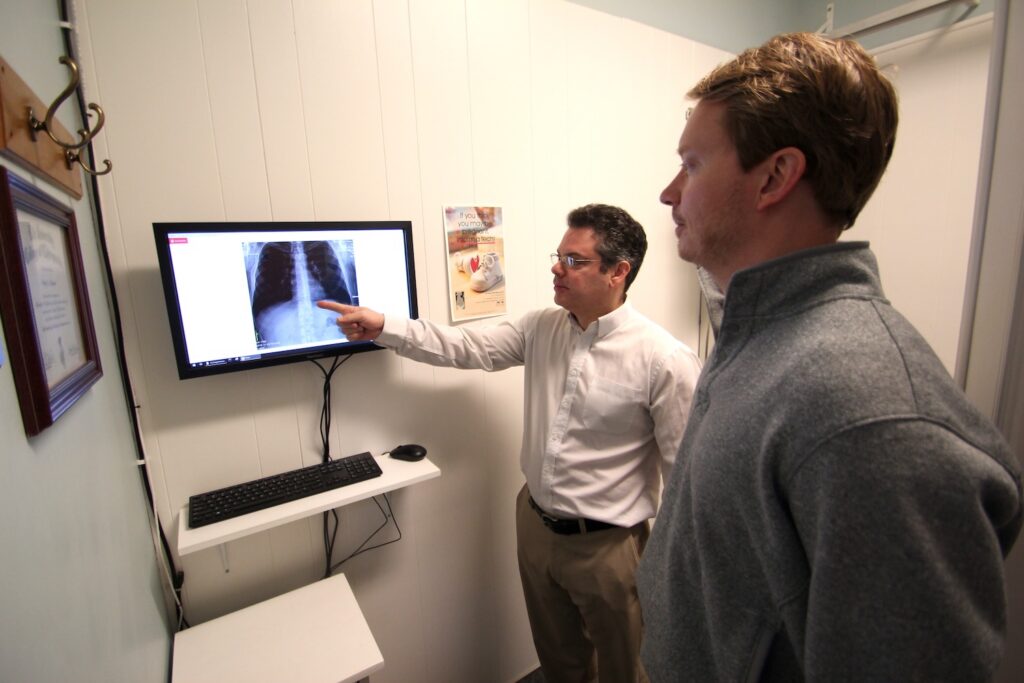
Most athletes do not need an immediate MRI. We order imaging if red flags are present, if symptoms aren’t improving as expected, or if surgical consultation is warranted. Your safety and long-term function drive every decision.
Prevention Strategies for Charlotte Athletes
Prevention starts with great mechanics and smart training. Here’s a simple, athlete-ready checklist we use often in the clinic:
- Respect the hinge: Keep your spine neutral and bend at the hips. Brace the core before you lift, rotate, or land.
- Build mid-back mobility: Stiffness in the thoracic spine shifts stress to the low back; add gentle extension and rotation drills.
- Grease the groove: Warm up with light, spine-friendly movements that match the day’s demands—then gradually increase load.
- Monitor volume spikes: Increase total load or mileage by small, steady increments. Sudden jumps invite disc irritation.
- Own the base: Strong glutes, balanced hamstrings, and a resilient core protect the lumbar discs during sport.
- Recover like it matters: Alternate hard and easy days, prioritize sleep, and break up long sitting with quick movement snacks.
- Gear and ground: Use supportive footwear, quality belts only when appropriate, and stable surfaces for heavy work.
- Listen early: Twinges, stiffness after sitting, or pain with coughing are early alerts—don’t push through; get checked.
When to See a Chiropractor vs. When to Seek Urgent Care
Chiropractic evaluation is appropriate anytime you have back or neck pain, pain that radiates into a limb, recurrent “tweaks,” or stiffness that limits performance. If symptoms persist beyond a few days, keep you from training, or keep returning as you ramp up, it’s time for an assessment. Early, targeted care can shorten recovery and reduce time off sport.
Seek urgent medical attention immediately if you notice new or worsening leg or arm weakness, loss of bowel or bladder control, saddle numbness, fever with severe back pain, or a major trauma. These symptoms are rare, but they need prompt medical evaluation. At Chiropractic Fitness, we coordinate care and referrals when those signs appear.
Myths and Facts About Disc Injuries and Chiropractic
| Myth | Fact |
|---|---|
| “A herniated disc always means surgery.” | Many disc herniations improve with conservative chiropractic care, time, and movement strategies. Surgery is reserved for specific cases. |
| “If my MRI looks bad, I won’t get better.” | Imaging findings don’t always match symptoms. Function-focused care often leads to strong results, even with age-related disc changes. |
| “Rest is the best cure.” | Short rest may help acutely, but graded movement guided by your chiropractor speeds recovery and protects performance. |
| “Adjustments are unsafe for discs.” | When delivered appropriately after an exam, spinal manipulation and mobilization are widely used for disc-related pain and have supportive guideline recommendations. |
| “Once you have a disc problem, sports are over.” | With proper mechanics, strength, and progression, most athletes return to full participation. |
Local Care at Chiropractic Fitness in Charlotte
Here in Charlotte, we see athletes from CrossFit boxes, high school fields, running clubs, golf courses, and weekend rec leagues. While the sports differ, the solution is similar: assess the spine, restore clean motion, calm the irritated tissue, and rebuild strong patterns that hold up under pressure. That is the heart of our approach at Chiropractic Fitness.
If you’re unsure whether your pain is a muscle strain, a joint restriction, or a disc issue, we’ll sort it out with a thorough history, a movement exam, and hands-on orthopedic and neurologic testing. Then we’ll create a plan that matches your goals and timeline, with chiropractic care at the center and a clear path back to your sport.
FAQs: Disc Injuries in Athletes
How do I know if I have a disc injury or just a muscle strain?
Disc pain often worsens with sitting, bending, or coughing and may cause radiating symptoms into an arm or leg. A focused chiropractic exam can differentiate disc involvement from muscle or joint issues.
Can chiropractic help a herniated disc?
Many athletes with disc herniations improve with chiropractic care that includes targeted adjustments, flexion-distraction, decompression, and guided rehab. Individual evaluation determines the best approach.
Should I get an MRI first?
Usually, no. Most athletes benefit from a clinical exam and a trial of conservative care first. MRI is considered if red flags are present or if progress stalls.
How long does recovery take?
Timelines vary. Some athletes improve within a few weeks; others need several weeks to months, depending on severity, sport demands, and training goals.
Can I keep training with a disc injury?
Often, yes—with modifications. We’ll identify safe movements and progressions so you maintain conditioning while the disc calms and heals.
Are spinal adjustments safe for athletes?
When performed after a proper evaluation, spinal adjustments are considered safe for most athletes and are recommended in major guidelines for certain types of back pain.
TL;DR
- Disc injuries are common in athletes and often improve with chiropractic-led, conservative care that restores motion, reduces nerve irritation, and rebuilds movement capacity.
- Watch for pain with sitting or bending, radiating symptoms, or recurrent stiffness—get evaluated early to shorten downtime.
- Prevention hinges on great mechanics, gradual loading, strong hips and core, and smart recovery.
- Urgent medical care is needed for red flags like new weakness, bowel/bladder changes, saddle numbness, fever, or major trauma.
- Here in Charlotte, Chiropractic Fitness provides evidence-informed spine care and sport-specific return-to-play planning for athletes at every level.