
Spinal Health, Posture, and Back Pain in Charlotte
Back pain is one of the most common reasons people in Charlotte miss work, pause workouts, or cut family time short. The good news: your spine is built to be strong and adaptable. With the right posture habits and proactive spinal care, you can ease current discomfort and help prevent future flare-ups. At Chiropractic Fitness, our focus is simple—keep your spine aligned, your joints moving well, and your nervous system communicating clearly so you can live and move with confidence.
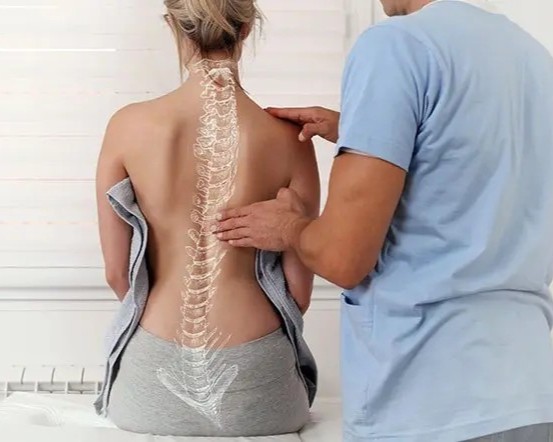
What do “spinal health” and “posture” mean? Spinal health is the overall condition and function of your spine, including alignment, joint mobility, and how well your nerves communicate. Posture is how you hold your body—while sitting, standing, and moving. Good posture reduces stress on your spine; poor posture increases it.
Table of Contents
- Why Spinal Health and Posture Matter for Back Pain
- The Biomechanics: How Posture Stresses or Supports Your Spine
- Common Posture Mistakes We See in Charlotte Patients
- How Chiropractic Care Prevents and Relieves Back Pain
- Everyday Habits That Support Healthy Alignment
- Special Considerations: Kids, Teens, and Active Adults
- When to See a Chiropractor
- Red Flags: When to Seek Medical Care Urgently
- Myths and Facts About Posture and Back Pain
- What to Expect at Chiropractic Fitness in Charlotte
Why Spinal Health and Posture Matter for Back Pain
Your spine is the main support column for your body and a protective pathway for your nervous system. When posture is balanced, your joints share loads evenly, your muscles work efficiently, and your discs experience less strain. When posture slips—think hours hunched over a laptop or slouched on the couch—certain joints and muscles are overloaded, which can trigger stiffness, aching, and recurrent pain.
Here in Charlotte, many of our patients spend long stretches commuting on I-77 or working at a screen in Uptown and South End offices. Repetition matters: even small posture imbalances, held for hours daily, can lead to big symptoms over time. Addressing alignment early prevents the “little things” from becoming chronic problems.
The Biomechanics: How Posture Stresses or Supports Your Spine
Think of your spine like a well-engineered bridge. If the load sits right over the supports, the structure holds with ease. If the load shifts forward, backward, or to one side, stress concentrates in fewer spots. Poor posture creates these overloads.
When your head drifts forward even an inch, the muscles in your neck and upper back must work harder to hold it up. Rounded shoulders reduce ribcage expansion and limit the way your mid-back moves, which can force your low back to compensate. Prolonged sitting shortens hip flexors and weakens glutes, tilting the pelvis and compressing the lower lumbar joints. Over time, these patterns can create trigger points, joint irritation, and pain with simple movements.
Healthy biomechanics don’t require perfect posture 24/7; they rely on balanced alignment most of the day and regular movement breaks. Chiropractic care helps restore proper joint motion so that good posture feels natural, not forced.
Common Posture Mistakes We See in Charlotte Patients
Small corrections can make a big difference. Here are patterns we frequently see—and what to do instead.
| Posture Mistake | Better Habit |
|---|---|
| Forward head at the computer | Bring the screen to eye level; keep ears over shoulders; adjust chair so elbows rest by your sides |
| Rounded shoulders while driving | Sit tall with hips all the way back; adjust mirrors while upright to cue good posture |
| Slouching on the couch | Use a small lumbar pillow; keep feet flat; change positions every 20–30 minutes |
| Standing with weight on one hip | Distribute weight evenly; engage glutes lightly; consider a footrest for prolonged standing |
| Phone at lap level (tech neck) | Hold the phone at chest/eye level; use voice-to-text to reduce looking down |
| Lifting with a rounded back | Hinge at hips; keep load close; exhale on the effort; move from your legs and hips |
How Chiropractic Care Prevents and Relieves Back Pain
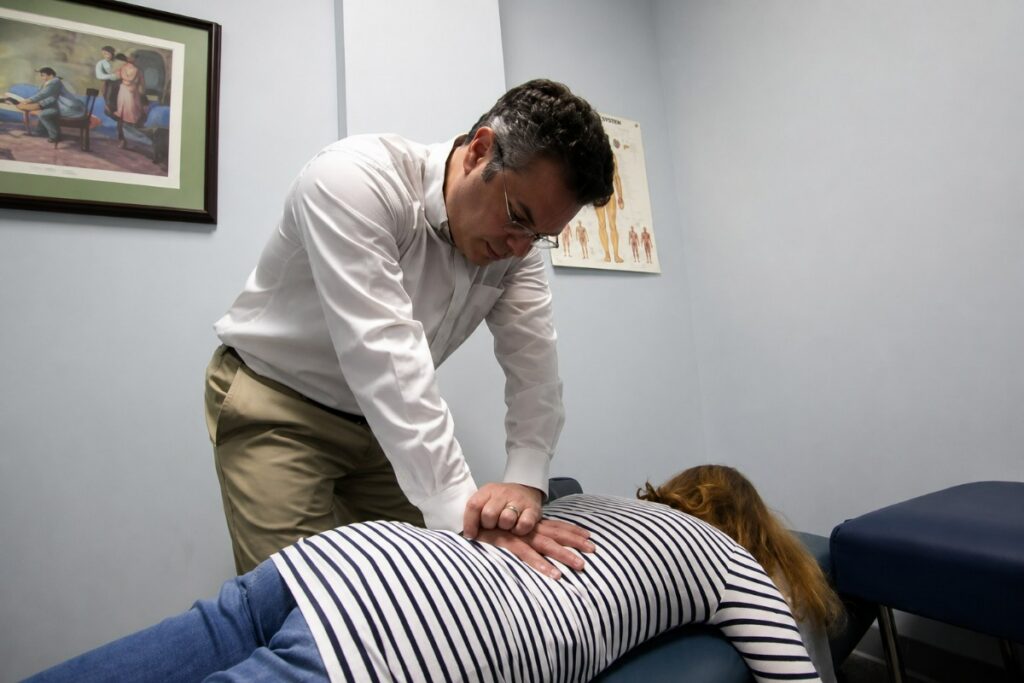
Chiropractic is frontline, conservative spine care. At Chiropractic Fitness, we start with a focused evaluation: your history, movement patterns, posture, and specific joint testing. From there, we design a plan to restore alignment and mobility, reduce irritation, and help your body move the way it’s meant to move.
Chiropractic adjustments are precise, hands-on techniques that improve joint motion and influence how surrounding muscles and the nervous system function. When motion is restored, posture becomes easier to maintain, muscles coordinate more efficiently, and pain often reduces. Research suggests spinal manipulation can help improve pain and function for many people with back pain and is considered a recommended non-surgical option in several guidelines.
For example, the World Health Organization’s guideline for chronic primary low back pain includes spinal manipulative therapy among recommended non-surgical approaches. The American College of Physicians has also noted spinal manipulation as a reasonable option for acute and chronic low back pain. The National Center for Complementary and Integrative Health provides summaries indicating that spinal manipulation may help some types of back pain and is generally safe when performed by a trained provider. We incorporate these evidence-informed principles every day in our Charlotte clinic.
Just as important, we coach you on posture and movement habits that reinforce the benefits of care. Alignment improves faster—and stays that way—when your daily routines support your spine.
References: WHO guideline for chronic low back pain (2023): who.int | American College of Physicians clinical practice guideline (2017): acponline.org | NCCIH: Spinal Manipulation for Low-Back Pain: nccih.nih.gov
Everyday Habits That Support Healthy Alignment
Simple changes add up, especially for commuters, desk workers, and active families in Charlotte. Here’s what we recommend most often:
- Set your screens at eye level. Keep your ears stacked over your shoulders, not in front of them.
- Use the 20/8/2 rule when possible: 20 minutes sitting, 8 minutes standing, 2 minutes walking or stretching.
- Support your low back. A small lumbar roll can reduce slouching at your desk or on the couch.
- Hinge at your hips when lifting. Keep the object close, spine neutral, and drive through your legs.
- Move daily. A brisk 10–20 minute walk loosens the hips and mid-back more than most realize.
- Strengthen your backside. Light glute and hip exercises help your pelvis sit in a healthier position.
- Sleep smart. Side sleeping with a pillow between knees or back sleeping with a small pillow under knees reduces lumbar strain.
- Hydrate and vary your routine. Stiffness often reflects too much of one posture and not enough movement variety.
Special Considerations: Kids, Teens, and Active Adults
Kids and teens in Charlotte are using screens more and carrying heavy backpacks. We evaluate posture early to support growing spines and help them build healthy habits. Keeping backpack weight modest and teaching neutral head and shoulder positions can prevent recurring aches.
Active adults, from South End runners to Lake Norman weekend boaters, benefit from regular spinal check-ins. Repetitive sports create patterns—tight in some areas, weak in others. Chiropractic adjustments, combined with targeted mobility and strength guidance, help balance those patterns and reduce the risk of overuse pain.
When to See a Chiropractor
It’s wise to schedule a chiropractic evaluation when:
- Your back pain lasts longer than a week, keeps returning, or is starting to limit your work, sleep, or workouts.
- You notice stiffness that makes it hard to stand tall or turn comfortably.
- You’ve increased desk time, travel, or training volume and feel your posture slipping.
- You want a proactive plan to protect spinal health before a big season, race, or life change.
Early evaluation helps us address the cause, not just the symptoms, and keeps mild issues from turning into chronic patterns.
Red Flags: When to Seek Medical Care Urgently
While chiropractic care is foundational for most spine-related aches and mobility issues, some situations warrant urgent medical evaluation. Seek immediate medical care if you experience:
- Severe, unrelenting pain with recent major trauma or a fall
- New or worsening leg weakness, trouble walking, or loss of coordination
- Numbness in the groin/saddle area, or loss of bowel or bladder control
- Unexplained fever, significant unexplained weight loss, or history of cancer with new back pain
- Back pain accompanied by chest pain, shortness of breath, or other symptoms of a medical emergency
If any of these apply, go to an urgent care or emergency department first. Chiropractic is not emergency care, and your safety always comes first. After any urgent issues are addressed, we can coordinate post-acute spinal care to help you recover motion and comfort.
Myths and Facts About Posture and Back Pain
- Myth: “If I just sit up straight all day, my back won’t hurt.” Fact: Static “perfect” posture can still strain tissues. Balanced posture plus regular movement breaks is the real solution.
- Myth: “Back pain means something is seriously damaged.” Fact: Most back pain is mechanical—related to joints, muscles, and movement—and responds well to conservative chiropractic care.
- Myth: “I need to stretch more, not see a chiropractor.” Fact: Stretching is helpful, but if joints are restricted or alignment is off, stretching alone may not solve the problem. Chiropractic adjustments restore motion so stretching works better.
- Myth: “I’ll get dependent on adjustments.” Fact: Our goal is independence. We correct mechanics, teach you how to maintain good posture and movement, and space visits based on your goals and progress.
What to Expect at Chiropractic Fitness in Charlotte
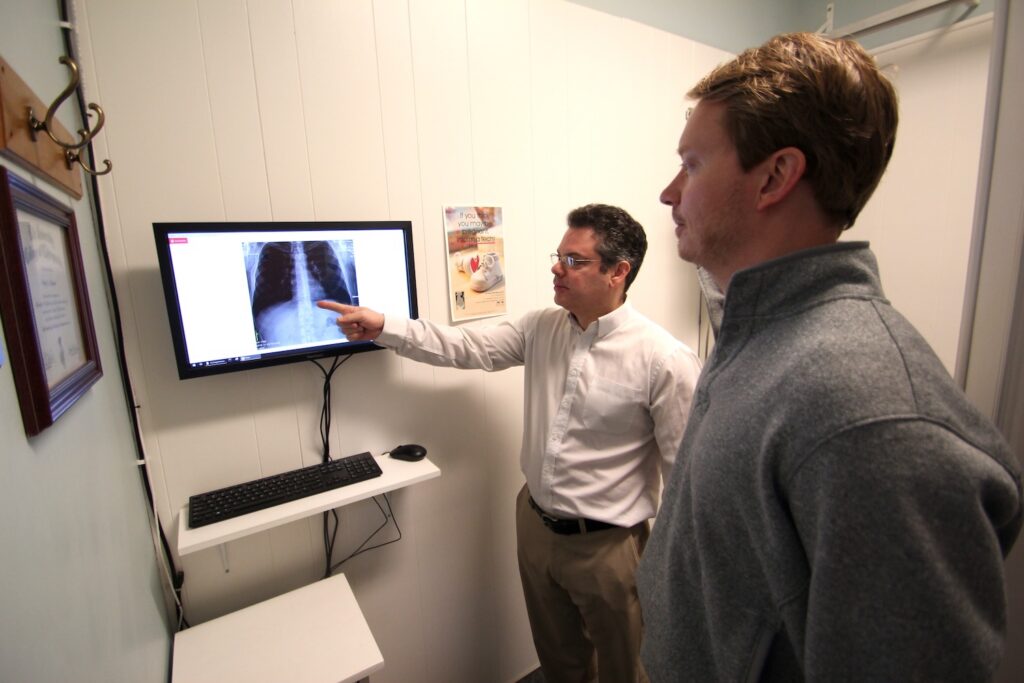
Your first visit is a conversation and a careful exam. We’ll discuss your daily habits, work setup, sports, and any past injuries. We assess posture, joint motion, muscle tone, and how your body moves through key patterns like bending, lifting, and turning. If imaging is appropriate based on your history and exam, we’ll discuss why and the next steps.
From there, we map out a clear plan. Expect gentle, precise adjustments, mobility and stability guidance, and simple at-home habits to reinforce your progress. Most patients notice changes in how they move and feel as alignment improves and muscles stop overworking to compensate.
We care for busy professionals, students, athletes, and families across Charlotte. Whether you’re driving daily on I-485, working long hours in Uptown, or staying active on our beautiful greenways, we’ll help you build a strong, resilient spine for the life you want to live.
Final Thoughts for Our Charlotte Community
Spinal health and posture are the foundation of pain-free living. When your alignment and movement are on track, everything feels easier—sitting, lifting, walking, and sleeping. If you’re in Charlotte and have questions about your posture or recurring back pain, our team at Chiropractic Fitness is here to help you take the next step with clarity and confidence.
FAQs
What are the early signs of poor posture?
Common signs include a forward head, rounded shoulders, frequent stiffness, and low back or neck tightness after sitting. If you notice these regularly, a chiropractic posture evaluation can help.
Can chiropractic adjustments really help prevent back pain?
For many people, yes. By improving joint motion and alignment, adjustments reduce mechanical stress and help your muscles work more efficiently, which can lower the chance of flare-ups.
How long does it take to improve posture?
It varies. Many patients feel changes within weeks as joint motion improves and daily habits shift. Consistency with recommendations makes the biggest difference.
Is it okay to exercise if my back aches?
Gentle movement is often helpful, but the right approach depends on your exam findings. A chiropractor can guide you on safe progressions and modifications.
Do I need imaging before starting care?
Not always. Many posture-related issues can be assessed and addressed without imaging. If your history or exam suggests it, we will discuss appropriate next steps.
TL;DR
- Good posture and spinal mobility share the load across your spine and help prevent back pain.
- Chiropractic care is a frontline solution for restoring alignment and easing mechanical stress.
- Small daily habits—screen height, movement breaks, and smart lifting—make a big difference.
- See a chiropractor early if pain lingers, returns often, or limits daily life; seek urgent medical care for red flags.
- Here in Charlotte, Chiropractic Fitness is ready to help you move comfortably and confidently.