

Back Pain Adjustments in Charlotte: What to Expect at Chiropractic Fitness
If you’re dealing with back pain in Charlotte, you’re not alone—and you don’t have to guess your way through it. At Chiropractic Fitness, back pain adjustments are a frontline, hands-on solution designed to restore motion, calm irritated joints, and help your body move the way it’s built to move. In this guide, I’ll walk you through what actually happens during a chiropractic adjustment for back pain, the techniques we use, what you might feel, and how we keep you safe and comfortable every step of the way.
Table of Contents
- What a Back Pain Adjustment Is (and Why It Matters)
- How We Evaluate Your Back Pain at Chiropractic Fitness
- The Techniques We Use During a Back Pain Adjustment
- What You Might Feel During and After an Adjustment
- Safety, Risks, and How We Keep You Comfortable
- Simple Steps You Can Take Today to Support Your Adjustment
- When to See a Chiropractor for Back Pain in Charlotte
- What to Expect at Your First Visit
- Myths and Facts About Back Pain Adjustments
- Final Thoughts for Our Charlotte Community
What a Back Pain Adjustment Is (and Why It Matters)
A back pain adjustment is a precise, skilled chiropractic technique that helps restore normal joint motion and alignment in the spine and pelvis. The goal is to reduce pain, improve function, and support your body’s natural ability to heal and stabilize.
Your spine is a column of moveable joints. When those joints lose normal motion—because of posture, strain, repetitive stress, or injury—the surrounding muscles work overtime and nerves can become irritated. A chiropractic adjustment restores proper motion to those segments so the muscles can relax, the joints can glide smoothly, and the nervous system can coordinate movement without “noise.”
Here in Charlotte, many patients tell us they’ve tried to “wait it out” or stretch it away. When pain lingers or keeps returning, it’s often a sign that the joints themselves need skilled, mechanical help. That’s exactly where chiropractic shines as a primary, non-invasive solution.
How We Evaluate Your Back Pain at Chiropractic Fitness
Every back is different. Before we adjust anything, we take time to understand your specific pattern of pain and movement. A typical evaluation includes:
- Conversation and history: We discuss when your pain started, what makes it better or worse, your daily activities, and any previous episodes.
- Movement and posture screen: We observe how you stand, bend, squat, and walk. These simple motions reveal where joints are stiff or moving too much to compensate.
- Orthopedic and neurological checks: These help us identify irritated joints, discs, or nerve involvement, and rule out red flags that would change our approach.
- Palpation: With trained hands, we feel how each spinal segment moves, where muscles are guarding, and which joints are restricted.
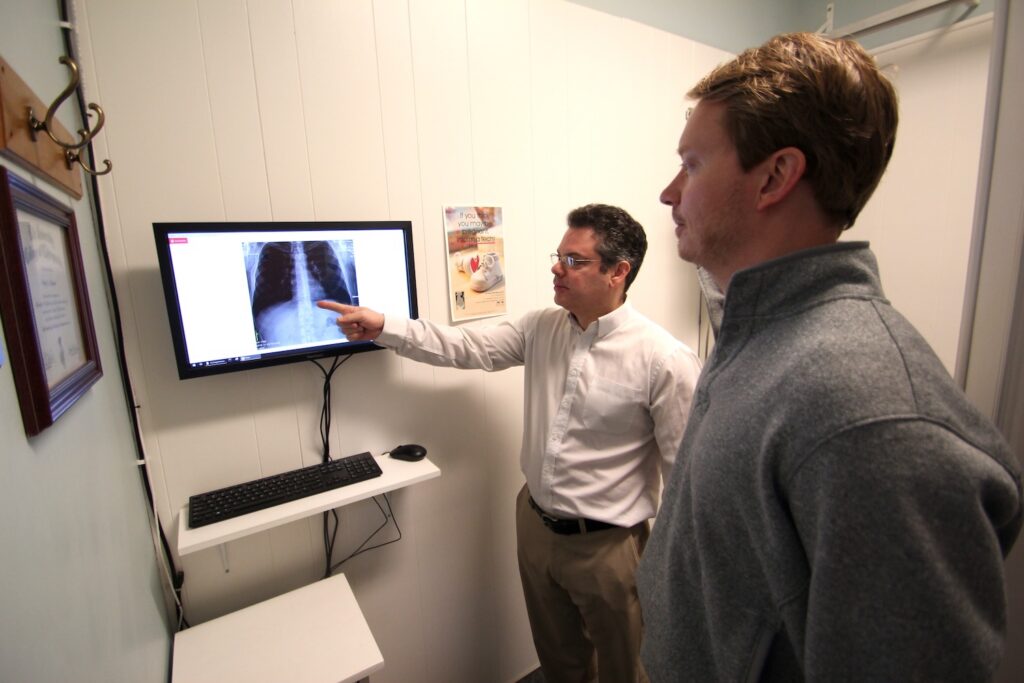
- Imaging when appropriate: Most people don’t need imaging to begin safe, effective chiropractic care. If your history or exam suggests something unusual—or if symptoms aren’t improving as expected—we may recommend imaging and coordinate as needed.
All of this guides a tailored plan, so your adjustment targets the right area, in the right way, at the right speed and depth.
The Techniques We Use During a Back Pain Adjustment
People often think every adjustment looks the same. In reality, chiropractors use a range of techniques. At Chiropractic Fitness, we choose the method that fits your body and goals—whether you’re a heavy lifter in South End, a parent carrying toddlers in Steele Creek, or a commuter sitting on I‑77.
Diversified (hands-on) adjustments
This is the classic, precise manual thrust delivered at a specific joint to quickly restore motion. You may hear a small “pop,” which is simply gas releasing from the joint—like opening a carbonated drink. It’s not bones grinding; it’s normal and not required for a successful adjustment.
Drop-table adjustments
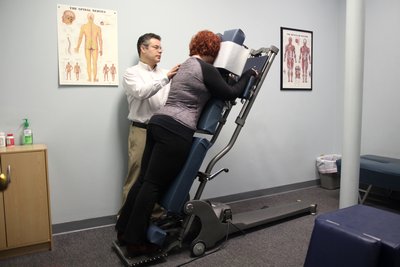
Specialized segments of the table gently drop a fraction of an inch as we apply a light thrust. The drop assists the adjustment, allowing a comfortable, efficient correction with less force. This is a great option for the pelvis, sacroiliac (SI) joints, and lumbar segments.
Flexion-distraction (traction-based)
With you lying comfortably face down, we create a gentle, rhythmical traction at the lower back. This technique can reduce joint pressure and improve mobility, and it’s often well tolerated for disc-related pain or stiffness.
Instrument-assisted adjustments
Using a handheld device, we deliver a quick, very controlled impulse to a specific joint. This can be ideal if you prefer a gentler approach or if you have certain health considerations.
Mobilization and low-force methods
Slow, graded movements can be used to relax guarded muscles and coax stiff joints into better motion without a quick thrust. Many patients appreciate this as a warm-up or as a stand-alone technique based on comfort and exam findings.
Support for surrounding tissues
Targeted muscle and fascia work may be used to reduce tightness around the joints we adjust. This supports better, longer-lasting mobility and helps you move comfortably between visits.
What determines the technique we choose? Your goals, your comfort level, and the way your joints are moving that day. Chiropractic is not one-size-fits-all. It’s skilled, specific, and adapted to your body.
What You Might Feel During and After an Adjustment
During a hands-on adjustment, you may feel a quick, precise pressure at a specific joint, often followed by an immediate feeling of ease or lighter movement. Some patients notice a gentle “release.” Others mainly feel the benefit when they stand up and move around.
After an adjustment, it’s common to feel any of the following:
- Freer motion: Bending, twisting, or turning can feel smoother.
- Less guarding: Muscles often relax as joint mechanics improve.
- Temporary soreness: Like starting a new workout, mild soreness for 24–48 hours can happen as tissues adapt to improved motion. Gentle walking and hydration usually help.
- Occasional fatigue or a “reset” feeling: Your nervous system is integrating new information. Easy movement and good sleep support this process.
Lasting change builds with consistency. Many patients feel relief early on, and continued adjustments help reinforce healthy motion and reduce recurrence.
Safety, Risks, and How We Keep You Comfortable
Chiropractic adjustments are widely used and, for most people with back pain, considered a safe, conservative option. We take safety seriously by screening for red flags, tailoring technique, and communicating clearly throughout the visit. If a technique doesn’t feel right for you, we have alternatives.
We also modify care for individual needs—such as gentler methods for older adults with osteoporosis concerns, pregnancy-friendly positioning, or instrument-assisted options for those who prefer low-force care.
Evidence from clinical guidelines supports spinal manipulation as part of first-line, non-invasive care for low back pain. Research suggests manipulation can help reduce pain and improve function for many patients, especially when combined with movement and education. For reference, see the American College of Physicians (ACP) guideline on noninvasive treatments for low back pain and NICE guidance in the UK highlighting manual therapy as a conservative option when appropriate (ACP, 2017; NICE NG59).
Helpful references: American College of Physicians guideline | NICE NG59: Low back pain and sciatica in over 16s
Simple Steps You Can Take Today to Support Your Adjustment
You can reinforce the benefits of your adjustment with small, consistent habits. Here are a few we coach patients on every day in our Charlotte office:
- Sit tall with hips slightly above knees, feet flat, and your low back supported. Think “chest proud, shoulders easy.” Change positions every 30–45 minutes.
- Use a hip hinge when you pick things up—bend at the hips, keep the item close, and push through your heels to stand.
- Take movement breaks. Two to three short walks (5–10 minutes) spread through the day keep joints nourished and muscles happier.
- Sleep smart. Try side-sleeping with a pillow between your knees, or back-sleeping with a small pillow under your knees to reduce lumbar strain.
When to See a Chiropractor for Back Pain in Charlotte
Consider booking with us if:
- Your pain lasts more than a few days or keeps returning after short-term relief. Persistent or recurring pain often means joints aren’t moving well and need focused care.
- Pain limits your work, workouts, or family time. If you’re modifying activities to avoid pain, it’s time to evaluate and address the cause.
- You feel stiff, locked-up, or “crooked.” Restrictions and asymmetries respond well to skilled adjustments.
- You’re ready for a hands-on, drug-free approach. Chiropractic is a frontline, conservative solution focused on restoring function.
Red flags that need prompt medical attention
- New bowel or bladder changes
- Saddle anesthesia
- Unexplained fever
- Significant trauma
- Progressive leg weakness
- Unexplained weight loss
What to Expect at Your First Visit
We keep your first appointment clear and comfortable:
- Conversation: Tell us your story—what you feel, where you feel it, and what you want to get back to doing.
- Exam: We check posture, motion, specific spine and hip joints, muscles, and nerves to pinpoint what’s driving your pain.
- Findings and plan: We explain what we found in plain language and outline a focused plan. You’ll know what we’re treating, how we’ll treat it, and what you can do between visits.
- First adjustment: When appropriate, we start care on day one using the technique that best fits your body and comfort level.
- Next steps: We’ll schedule follow-ups and provide simple at-home strategies to help your results last.
Myths and Facts About Back Pain Adjustments
- “The pop means the bones are cracking.”
- The sound is gas releasing from the joint as pressure changes (cavitation). It’s not bones rubbing and isn’t required for a successful adjustment.
- “Adjustments are one-size-fits-all.”
- We select techniques based on your exam, goals, comfort, and how your joints move on that day.
- “If I start, I’ll have to go forever.”
- You remain in control. Many feel relief quickly; ongoing care is a choice to maintain mobility and prevent recurrence, much like dental hygiene or fitness.
- “Back pain will go away if I just rest.”
- Short rest may help acute flares, but lingering pain often reflects joint dysfunction that benefits from targeted chiropractic care and steady movement.
Final Thoughts for Our Charlotte Community
Back pain can be frustrating, but it’s also highly treatable with the right approach. At Chiropractic Fitness here in Charlotte, we use precise, evidence-informed chiropractic techniques to restore motion, reduce pain, and help you move with confidence again. If you live near Uptown, Plaza Midwood, Dilworth, or anywhere around Mecklenburg County, we’re here to help you get back to what you love—safely and efficiently.
FAQs
Is a chiropractic adjustment safe for lower back pain?
For most people, yes. Chiropractic adjustments are considered a safe, conservative option when delivered by a licensed chiropractor after a proper evaluation. We screen for red flags and tailor techniques to you.
How long does a back pain adjustment take?
The adjustment itself is brief—often a few minutes within a 15–30 minute visit, depending on your case and the techniques used.
Will I need imaging before an adjustment?
Not usually. Most back pain can be evaluated and treated safely without imaging. If your history or exam suggests something that warrants imaging, we’ll discuss and coordinate it.
What causes the popping sound during an adjustment?
That sound is gas releasing within the joint as pressure changes (cavitation). It’s normal and not required for a successful adjustment.
Can you adjust my back without “cracking”?
Yes. We have gentle options like instrument-assisted or low-force mobilization techniques, designed for comfort while still improving joint motion.
How many visits will I need?
It varies. Some feel relief quickly; more persistent issues may require a short plan of care. We’ll review progress together and adjust the plan as you improve.
TL;DR
- A back pain adjustment is a precise chiropractic technique to restore joint motion, reduce pain, and improve function.
- We customize techniques—manual, drop-table, traction-based, instrument-assisted—based on your exam and comfort.
- You might feel easier movement right away; mild soreness can happen as your body adapts.
- Chiropractic is a frontline, conservative option supported by clinical guidelines for many back pain cases.
- If you’re in Charlotte and back pain is limiting your life, a focused evaluation and adjustment plan can help you move again with confidence.