
Here at Chiropractic Fitness in Charlotte, we meet a lot of people who are managing scoliosis and want to feel stronger, stand taller, and move with less tension. The right at-home exercises can make a meaningful difference—especially when they’re chosen to fit your unique curve pattern and guided by a chiropractor who understands spinal biomechanics. In this guide, I’ll walk you through safe, practical exercises you can start at home, why they help, and how chiropractic care ties it all together for better mobility and comfort.
Quick definition: What is scoliosis? Scoliosis is a three-dimensional curve of the spine—often in a “C” or “S” shape—with some rotation of the vertebrae. Many people with scoliosis live full, active lives. Conservative care focuses on comfort, mobility, strength, and smart movement habits; in adolescents, monitoring is important to watch for progression.
Table of Contents
Understanding Scoliosis in Plain Language
Scoliosis means the spine curves to the side and slightly rotates. It can appear in childhood or adolescence (often called adolescent idiopathic scoliosis) or develop in adulthood as the discs and joints age (degenerative scoliosis). In many cases, scoliosis is mild. The goal of conservative care is to support your body so you move well, breathe fully, and keep daily activities comfortable.
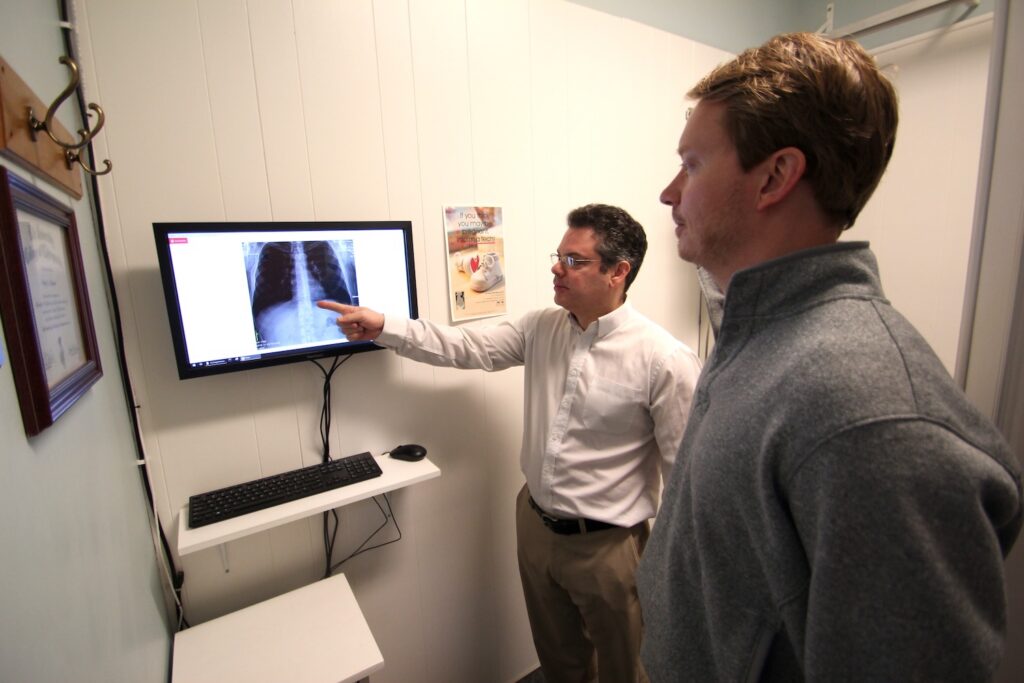
Two people can have the same Cobb angle (the way a curve is measured on X-ray) and feel very different in their bodies. That’s why a personalized plan matters. A curve is three-dimensional, and your exercise plan should reflect that—focusing on mobility where you’re stiff, strength where you’re under-supported, and balanced patterns that fit your unique alignment.
For general background on scoliosis, the National Institute of Arthritis and Musculoskeletal and Skin Diseases (NIAMS) provides an accessible overview of types and care options: NIAMS: Scoliosis.
Why Gentle, Targeted Exercise Matters
Movement is one of your spine’s best allies. With scoliosis, thoughtful exercise helps you reduce asymmetrical strain, improve posture awareness, and build resilience in the muscles that support your spine, ribs, and pelvis. Breathing work is especially valuable because your ribcage is part of the curve; learning to expand the side that tends to collapse can help you feel more open and centered.
Research suggests that scoliosis-specific exercise can improve function and posture, and may help slow progression in some adolescents, though the strength of evidence varies and results depend on individual factors. For readers who like to dig deeper, see summaries such as Cochrane reviews on exercise for adolescent idiopathic scoliosis. The key takeaway for most people: consistent, well-coached movement supports better comfort and control.
Safe At-Home Exercises for Scoliosis
The following exercises are gentle, emphasize alignment and control, and are appropriate for many people living with scoliosis. Always move within a comfortable range. Stop if you feel sharp pain, tingling, or dizziness. For the best results, have us check your curve pattern at Chiropractic Fitness so we can tailor which side to emphasize and fine-tune your form.
| Exercise | What It Targets | How To Do It (Brief) | Reps/Time |
|---|---|---|---|
| Diaphragmatic breathing with rib expansion | Rib mobility, core activation, relaxation | Lie on your back or sit tall. One hand on belly, one on side ribs. Inhale through the nose, gently expanding the ribcage in all directions; exhale slowly through pursed lips. | 5–10 slow breaths, 1–2 sets |
| Cat–Camel | Spinal mobility, segmental control | On hands and knees, round your back up toward the ceiling, then gently arch, moving one segment at a time. Keep it smooth and pain-free. | 8–12 reps, 1–2 sets |
| Child’s Pose with lateral reach | Opening the tighter rib side, lats | From Child’s Pose, walk both hands to the right for 3–5 breaths, then to the left. Keep hips back, reach long through fingertips. | 3–5 breaths each side, 1–2 rounds |
| Open Book (thoracic rotation) | Mid-back rotation, rib glide | Side-lying with knees bent. Arms together in front. Open top arm wide, rotating your chest; follow your hand with your eyes. Return slowly. | 6–10 reps each side |
| Wall Angels | Posture, shoulder and upper-back mobility | Stand with back and head near a wall, ribs gently down. Slide arms up the wall in a “snow angel” motion without arching your low back. | 6–10 slow reps |
| Glute Bridge | Hip extension strength, pelvic control | On your back, knees bent. Exhale, brace gently, press through heels, and lift hips while keeping ribs down and spine long. Lower with control. | 8–12 reps, 2–3 sets |
| Bird-Dog | Core stability, anti-rotation control | On hands and knees. Reach opposite arm and leg long without twisting your torso. Pause, then switch. Keep hips level. | 6–8 reps/side, 2 sets |
| Side Plank (modified) | Lateral core, obliques | From your side with knees bent, lift hips to form a straight line from shoulders to knees. Breathe steadily; avoid shrugging. | 15–30 sec/side, 2 rounds |
| Standing Band Row | Scapular strength, posture control | Anchor a light band at chest height. Stand tall, ribs down. Row elbows back, squeeze shoulder blades gently, and control the return. | 10–15 reps, 2 sets |
How often? Most people do well with 3–5 days per week, alternating mobility and stability focus. Breathe slowly throughout each movement. Quality over quantity—always. If you’re in South End, Dilworth, Ballantyne, or anywhere around Charlotte, feel free to bring your current routine to our office so we can refine it together.
Common Mistakes to Avoid
- Holding your breath. With scoliosis, breath is part of the exercise—use it to expand the “tighter” side of your ribcage.
- Chasing big stretches. Gentle, repeated motion usually beats forcing range. Sharp or pinching pain is a stop sign.
- Ignoring alignment. Keep ribs softly down, neck long, and pelvis level; small posture cues add up.
- Doing only flexibility or only strength. You need both mobility and stability for balanced control.
- Inconsistency. A few well-done minutes most days typically outperforms a long, exhausting session once a week.
How Chiropractic Care Fits In
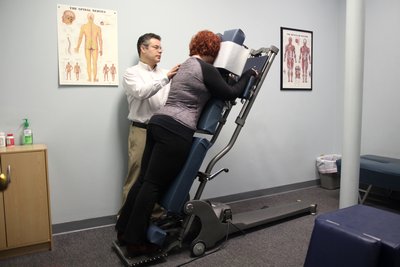
Chiropractic care is a frontline, conservative approach for spine-related conditions like scoliosis. At Chiropractic Fitness, we start with a thorough evaluation of alignment, joint motion, muscle balance, breathing patterns, and functional movement. From there, we build a personalized plan that typically includes targeted chiropractic adjustments and a curve-aware exercise routine you can continue at home.
Why adjustments matter: when specific joints are restricted, your body works around them, creating extra tension elsewhere. Gentle, precise adjustments aim to restore motion, reduce protective muscle guarding, and improve your nervous system’s control of movement. That gives your exercises a better foundation to “stick.”
What to expect in our clinic: we’ll map your posture, assess where your spine moves too little or too much, and coach you through cues for breathing, stacking your ribs over your pelvis, and stabilizing through your hips and core. For adolescents, we also monitor standing posture and movement patterns over time. While no conservative care can promise to “straighten” a curve, chiropractic paired with the right exercises often helps people move better, feel more symmetrical, and stay active with confidence.
When to See a Chiropractor in Charlotte
Consider scheduling with our team if you notice any of the following:
- Persistent mid-back or low-back tightness that lasts more than 1–2 weeks, especially if it limits work, school, or recreation
- Difficulty standing tall or feeling centered even after stretching
- Frequent muscle spasms or fatigue on one side of your back or hips
- New postural changes in a teen (one shoulder higher, one hip more prominent, clothing hanging unevenly)
- You’re ready for a customized plan so you’re not guessing which exercises fit your curve
Our role is to lead your spine care, progress your plan step by step, and coordinate referrals if something outside chiropractic care is needed.
When to Seek Medical Evaluation
Some situations call for medical evaluation rather than exercise-first care. Seek prompt medical attention for any of the following:
- Sudden, severe back pain after a fall or accident
- New or progressive numbness, weakness, or changes in walking
- Changes in bowel or bladder control
- Unexplained fever, chills, or unintentional weight loss along with back pain
- Shortness of breath unrelated to activity
These are not common with typical scoliosis but should be taken seriously.
Myths vs. Facts About Scoliosis Exercise
- Myth: “Exercise can’t help scoliosis.”
- Fact: While exercise isn’t a guaranteed way to change a curve angle, it can improve posture control, comfort, breathing mechanics, and daily function. Evidence for scoliosis-specific exercise in adolescents suggests potential benefits for posture and function, with individual results varying.
- Myth: “Only intense workouts work.”
- Fact: Consistent, low-load, well-coached movements are usually best. Quality breathing and control beat high strain or fatigue.
- Myth: “If it doesn’t hurt, it’s not working.”
- Fact: Pain is not a measure of progress. Gentle, precise exercises build durable change without flare-ups.
For additional background reading on scoliosis and conservative approaches, NIAMS offers reliable patient information (NIAMS: Scoliosis), and systematic reviews summarize the evolving evidence for exercise in adolescents (e.g., Cochrane Library reviews on scoliosis-specific exercise).
Final Thoughts from a Charlotte Chiropractor
If you’re in Charlotte and managing scoliosis, you’re not alone. With the right guidance, most people can move, work, and play with confidence. Chiropractic care provides the foundation—targeted adjustments, movement coaching, and a personalized home plan—so your exercises do more for you. Start with the simple routine above, listen to your body, and let us fine-tune your plan so it fits your unique spine. If questions come up, we’re here to help at Chiropractic Fitness.
FAQs
What are the best exercises for scoliosis at home?
Gentle mobility plus core control works well: diaphragmatic breathing, Cat–Camel, Open Book rotations, Wall Angels, Glute Bridges, Bird-Dogs, and modified Side Planks. The best plan is personalized after an exam.
How often should I do scoliosis exercises?
Most people do well with 3–5 days per week. Keep sessions short, focused, and pain-free. Consistency beats intensity.
Can chiropractic care fix my scoliosis?
No conservative care can promise to straighten a curve. Chiropractic focuses on alignment, joint motion, and neuromuscular control to reduce tension, improve function, and help you move more comfortably.
Is it safe for teens with scoliosis to exercise?
Yes—when movements are well chosen and supervised. We monitor posture and function and guide families on safe progressions. In adolescents, regular monitoring for progression is important.
Should I avoid lifting weights if I have scoliosis?
Not necessarily. With good form, appropriate loads, and a balanced program, strength training can be beneficial. Get a chiropractic assessment first to tailor your plan.
When should I get imaging?
Imaging may be helpful when exam findings suggest progression, structural concerns, or when it will change your care plan. We’ll advise you after a thorough evaluation.
TL;DR
- Gentle, consistent exercises—breathing, mobility, and core control—support comfort and posture in scoliosis.
- Chiropractic care is a frontline, conservative approach that aligns the spine, improves motion, and personalizes your plan.
- Start with slow, controlled movements; stop if you feel sharp pain or neurological symptoms.
- See a chiropractor if symptoms persist or posture changes; seek medical care for red flags like trauma, neurological loss, or systemic symptoms.
- Here in Charlotte, our team at Chiropractic Fitness can tailor your routine to your unique curve and goals.